
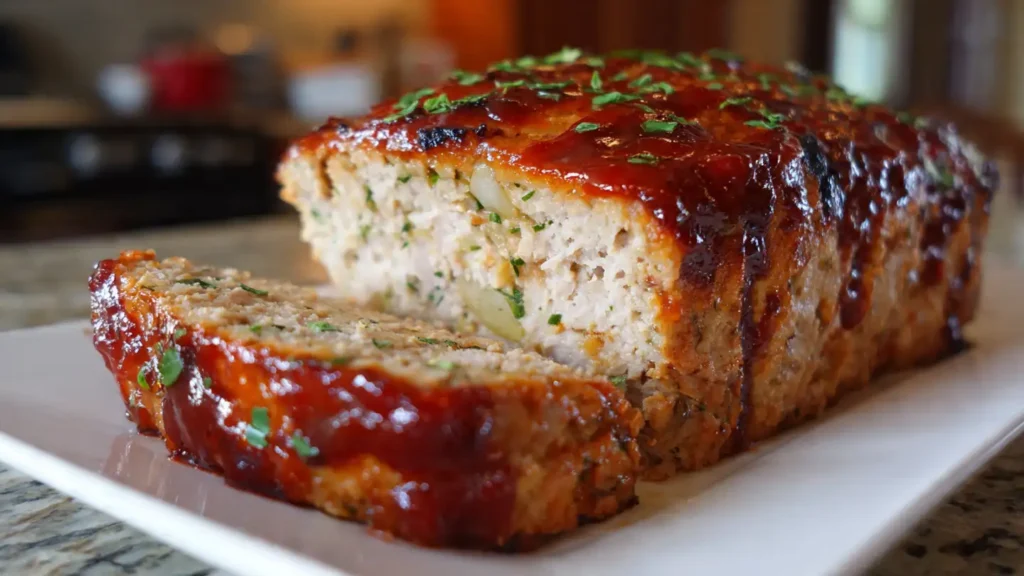
Homestyle Turkey Meatloaf (Juicy, Easy & Comforting)
Turkey meatloaf has a reputation problem. Made without much attention to moisture, it can turn out pale, dense, and dry, which is exactly the opposite of what a “homestyle” dinner is supposed to feel like. The good news is that turkey meatloaf doesn’t need special ingredients to turn out tender and sliceable. It needs a few specific steps done in the right order: a hydrated panade, cooled aromatics, gentle mixing, and a thermometer instead of a guess.
This version uses 2 pounds of 93% lean ground turkey, a classic ketchup glaze, and a straightforward method built around those moisture-protecting steps. It’s sized for a family dinner, made from pantry-friendly ingredients, and baked in a standard loaf pan for the neat, familiar slices people expect from meatloaf.
Why You’ll Like This Recipe
- One bowl, one pan. Everything comes together in a mixing bowl and bakes in a single loaf pan, with minimal cleanup.
- Built-in moisture strategy. The milk-and-panko panade and the 93% lean turkey work together instead of leaving tenderness to chance.
- Clear doneness cue. Instead of guessing based on time or color, you’re working toward one number: 165°F in the center.
- Good for leftovers. It slices cleanly once rested and reheats well for lunches or a second dinner.
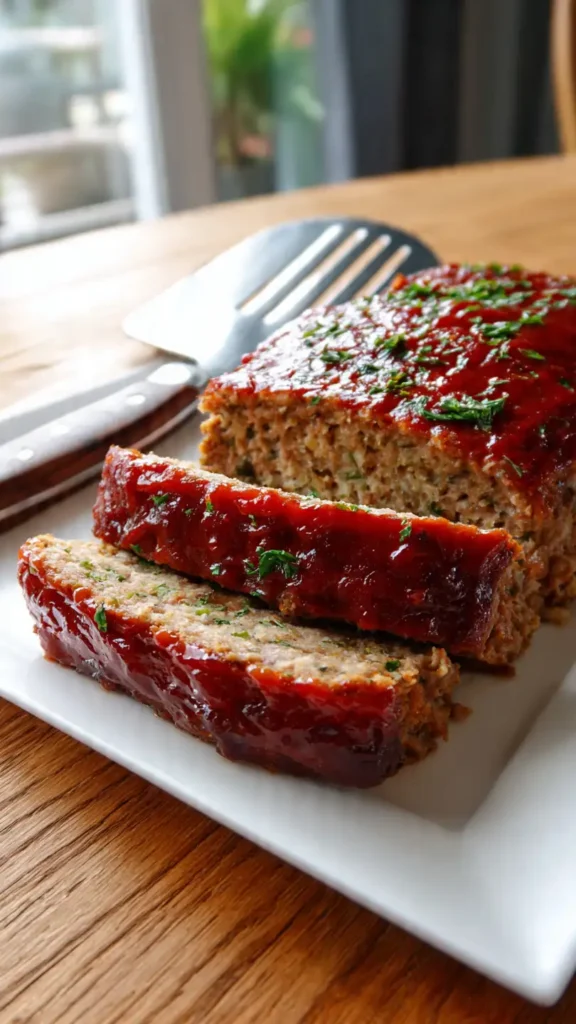
Quick Recipe Snapshot
- Prep time: 20 minutes
- Cook time: 60 minutes
- Total time: 1 hour 30 minutes
- Servings: 6
- Category: Dinner
- Cuisine: American home cooking
What Matters Most for This Recipe
The single most important step in this recipe is also the easiest to rush past: soaking the panko breadcrumbs in milk before they ever touch the turkey. This mixture is called a panade, and it isn’t a filler step. As the panko sits in milk, its starches absorb the liquid and form a soft, paste-like mixture that coats the ground turkey once it’s mixed in. That coating is what helps keep a leaner protein like turkey from turning tight and dry in the oven.
The cue to watch for is texture, not time: the panko should look fully moistened and paste-like, with no dry, flaky crumbs remaining, before you add it to the meat mixture. If it still looks dry after five minutes, give it another minute or two.
The second piece of the moisture system is restraint during mixing. Once the turkey goes into the bowl, mix only until everything is evenly distributed: no dry crumb pockets, no streaks of egg, no unmixed seasoning. Overworking ground turkey compacts the protein and can leave you with a denser, tougher loaf, so stop as soon as the mixture looks uniform rather than kneading it smooth.
Ingredients
- 1 tablespoon olive oil
- 1 medium yellow onion, finely chopped
- 2 garlic cloves, minced
- 3/4 cup plain panko breadcrumbs
- 1/2 cup whole milk
- 2 pounds 93% lean ground turkey
- 2 large eggs, lightly beaten
- 1 tablespoon Worcestershire sauce
- 1/4 cup ketchup (for the meat mixture)
- 1 teaspoon dried thyme
- 1 teaspoon fine sea salt
- 1/2 teaspoon black pepper
- 1/2 cup ketchup (for the glaze)
- 1 tablespoon packed light brown sugar
- 1 tablespoon Dijon mustard
A few notes on the ingredients: The ketchup is used in two places and in two different amounts, so it’s listed twice above to keep the two uses clear: 1/4 cup goes into the meat mixture itself, and 1/2 cup goes into the glaze mixed with brown sugar and Dijon mustard. The 93% lean turkey is a deliberate middle ground. It carries more fat than an ultra-lean 99% blend, which gives the panade less work to do, while still keeping the dish recognizably turkey meatloaf rather than something closer to a beef-style formulation.
Equipment
- Instant-read food thermometer. This is the only reliable way to confirm the loaf has reached a safe internal temperature. Color and juices aren’t dependable substitutes for ground poultry.
- 9-by-5-inch loaf pan. This is the format the recipe is built around, giving you a classic, evenly shaped loaf that’s easy to slice.
- Large skillet. For softening the onion and garlic before they go into the mixture.
Substitutions
- Whole milk → unsalted chicken or turkey broth, or water (same 1/2 cup amount). Both can hydrate the panade effectively. Broth adds savory flavor but also adds sodium, so keep this in mind if you’re watching salt intake. Water is neutral in flavor but won’t add the same richness.
- 93% lean ground turkey → 99% lean ground turkey. This works, but the loaf will likely be a little less rich and more prone to dryness, since there’s less fat for the panade to work alongside. If this is your only option, be extra careful not to overmix, and lean on the thermometer rather than the clock.
How to Make It
- Heat the oven to 350°F. Line a 9-by-5-inch loaf pan with parchment paper, leaving some overhang on the sides to make lifting the loaf out easier later, and lightly coat the parchment with cooking spray. Set the pan on a rimmed baking sheet.
- Heat the olive oil in a skillet over medium heat. Add the onion and cook until softened and translucent, about 5 to 7 minutes. Add the garlic and cook just until fragrant, about 30 seconds. Transfer the mixture to a plate and let it cool until it’s no longer steaming; adding warm onion to the turkey mixture can make the eggs set prematurely and the meat harder to work with.
- In a large bowl, combine the panko and milk. Let the mixture stand for about 5 minutes, until the panko looks soft and paste-like rather than dry and flaky.
- Add the cooled onion mixture, eggs, Worcestershire sauce, the 1/4 cup ketchup, thyme, salt, and pepper to the panade. Stir until evenly combined.
- Add the ground turkey. Mix gently, using your hands or a spatula, only until there are no dry crumb pockets, egg streaks, or unmixed seasoning left. The mixture should look moist and hold together when pressed, not smooth or paste-like.
- Transfer the mixture to the prepared loaf pan and gently level the top. Don’t pack it down tightly; a loosely shaped loaf bakes up more tender than a compacted one.
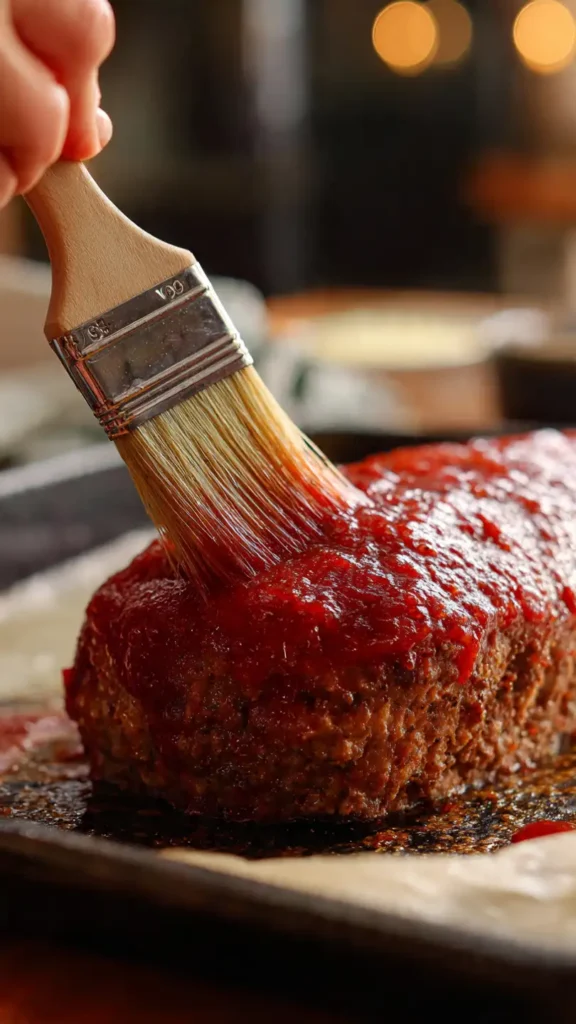
- In a small bowl, stir together the remaining 1/2 cup ketchup, brown sugar, and Dijon mustard until smooth. Spread about half of this glaze over the top of the loaf.
- Bake for 40 minutes, then spread the remaining glaze over the top. Continue baking for 15 to 25 minutes more, until an instant-read thermometer inserted into the thickest center reads 165°F. Start checking around the 55-minute mark, since oven calibration and pan material can shift the actual bake time.
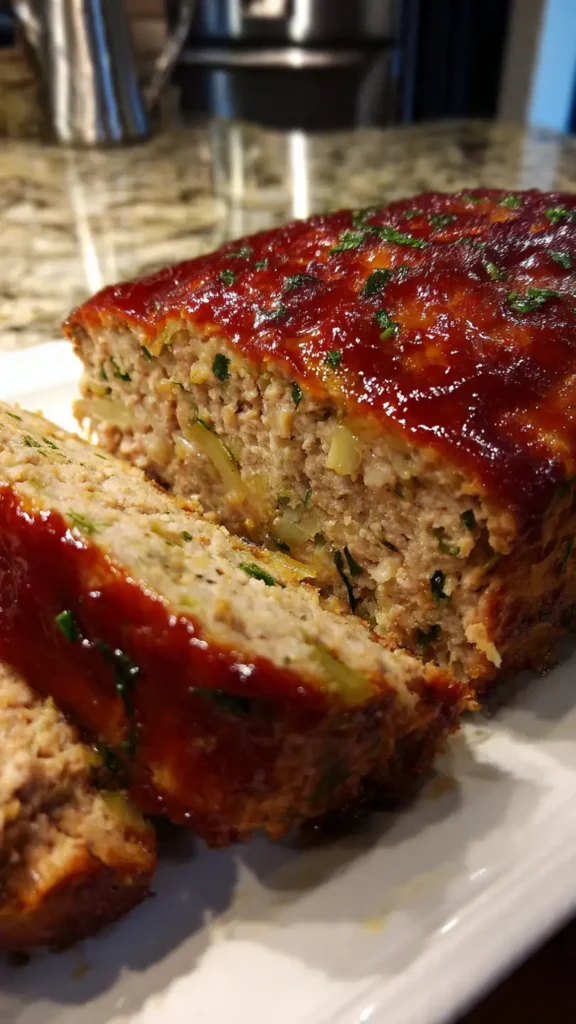
- Let the loaf rest in the pan for 10 minutes before lifting it out by the parchment overhang. Resting gives the loaf time to firm up slightly, which makes for cleaner slices than cutting it immediately.
Troubleshooting
Problem: The meatloaf turns out dry.
This usually traces back to skipping or under-hydrating the panade, using an ultra-lean turkey blend, or continuing to bake past 165°F because the timer said so. Stick with 93% lean turkey, make sure the panko is fully hydrated before mixing, and pull the loaf as soon as the center hits 165°F rather than baking for a fixed amount of extra time.
Problem: The texture is dense or tough.
This is almost always a sign of overmixing. Stir the wet ingredients and seasonings together first, then fold in the turkey only until everything is evenly distributed. If the mixture starts to look smooth or sticky rather than just combined, you’ve gone too far.
Problem: The loaf crumbles when you slice it.
This can happen if it’s cut before it’s rested, or if the mixing wasn’t thorough enough to bind everything evenly. Give the loaf the full 10-minute rest before your first cut, and make sure the eggs and panade were mixed in evenly at the start.
Problem: There’s liquid pooling in the pan.
This is usually related to the onion not being cooked down enough before mixing, or extra liquid being added beyond the recipe’s proportions. Sautéing the onion until it’s softened, and sticking to the milk amount as written, keeps the mixture properly balanced.
Storage and Reheating
Refrigerate cooked meatloaf within 2 hours of baking, and store leftovers in an airtight container for 3 to 4 days. For longer storage, freeze cooked portions in airtight, freezer-safe packaging; they’ll hold their best quality for about 2 to 6 months. Thaw frozen portions in the refrigerator before reheating.
When reheating, bring leftovers back to 165°F. Covering slices in a baking dish with a little extra glaze, broth, or water helps offset the surface drying that can happen during reheating, though the internal temperature is what determines safety, not appearance.
What to Serve With It
- Mashed potatoes, for the classic meatloaf-and-potatoes pairing
- Roasted green beans or broccoli for a simple vegetable side
- A crisp green salad to balance the richness of the glaze
- Buttered egg noodles or rice as an easy starch swap
- Dinner rolls, for scooping up extra glaze
Nutrition
Nutrition is estimated per serving, based on 6 servings from this specific recipe formulation. Actual values will vary depending on the exact brands of ground turkey, ketchup, breadcrumbs, and Worcestershire sauce used.
- Calories: approximately 340 kcal
- Protein: approximately 32 g
- Carbohydrates: approximately 20 g
- Fat: approximately 15 g
- Saturated fat: approximately 4.5 g
- Fiber: approximately 1 g
- Sugar: approximately 10 g
- Sodium: approximately 760 mg
FAQ
How do I keep turkey meatloaf from turning out dry?
There isn’t one single fix; it comes from a few steps working together. Use 93% lean ground turkey rather than an ultra-lean blend, hydrate the panko in milk before mixing, cook the aromatics and let them cool, mix gently, and pull the loaf as soon as it reaches 165°F in the center rather than baking longer than necessary.
What internal temperature should turkey meatloaf reach?
Ground turkey needs to reach 165°F in the thickest part of the loaf. This is the safe minimum temperature for ground poultry, and it applies to reheated leftovers as well. Relying on color or bake time alone isn’t a reliable way to confirm doneness.
Can turkey meatloaf be made ahead, refrigerated, or frozen?
Yes. Refrigerate cooked meatloaf within 2 hours of baking and use it within 3 to 4 days, or freeze portions for 2 to 6 months for best quality. Thaw frozen portions in the refrigerator, and reheat any leftovers to 165°F before serving.
Should turkey meatloaf be baked in a loaf pan or shaped free-form on a sheet pan?
Both are workable, but they aren’t interchangeable in terms of timing. This recipe is built around a 9-by-5-inch loaf pan, which gives a classic, evenly shaped loaf. A free-form loaf on a sheet pan exposes more surface area and browns differently, so it needs its own timing rather than borrowing this recipe’s bake time. Either way, the thermometer is what determines when it’s done.
Final Notes
The details that make the biggest difference in this recipe aren’t complicated: hydrate the panko fully before it meets the turkey, cool the onion before mixing, stop mixing as soon as everything is combined, and let the thermometer, not the clock, tell you when the loaf is done. Handled that way, this turkey meatloaf slices cleanly and holds up well as leftovers for the rest of the week.
Homestyle Turkey Meatloaf (Easy and Comforting)
A homestyle turkey meatloaf recipe using 2 lbs ground turkey, a milk panade for tenderness, and a ketchup glaze. Easy, family-sized, and oven-tested for safety.
Ingredients 0/15
Instructions 0/9
Did you love this recipe?
Share it with your friends & family!

Leave a Comment