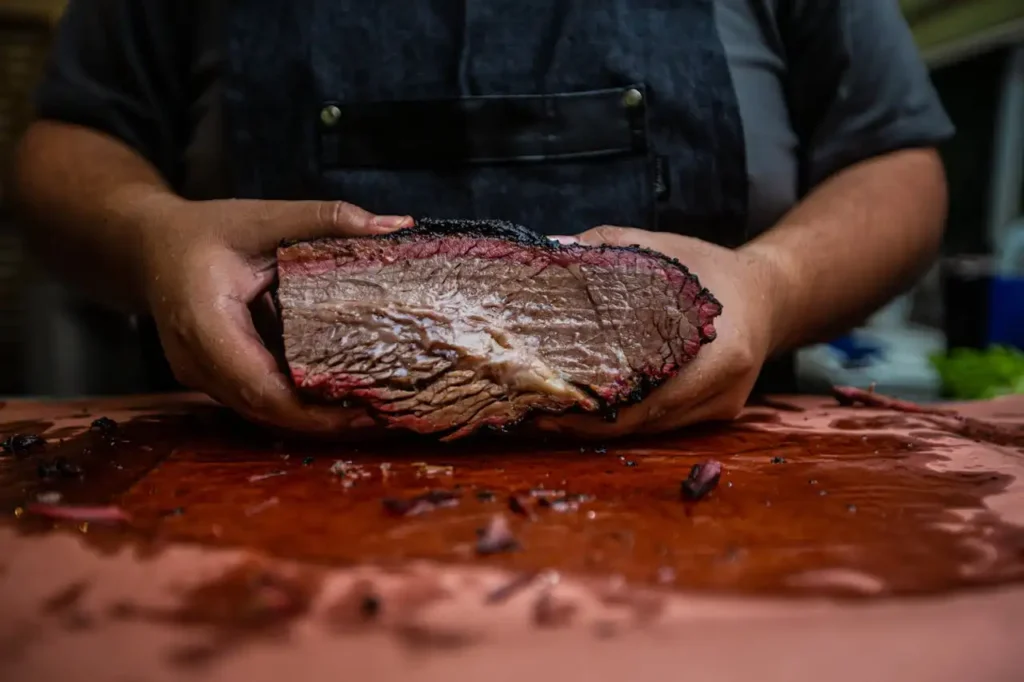
The first time I sliced into a ribeye straight off the grill, I watched about a quarter cup of juice pool on the cutting board. The steak tasted fine, honestly, but something felt wrong. I’d spent twenty minutes babying that piece of meat and half of what made it worth eating was sitting in a pink puddle, soaking into the wood. That’s when I started actually learning why you need to rest meat after cooking, not just that you’re supposed to.
It’s one of those habits that sounds fussy until you understand the physics behind it. And once you do, you’ll never skip it again.
Table of Contents :
What Carryover Cooking Actually Does to Your Meat
Here’s the part most people skip over: resting isn’t just about juice redistribution. There’s a second thing happening that matters just as much.
When you pull a thick steak or a roast off the heat, the cooking doesn’t stop. The exterior of the meat is significantly hotter than the center, and that stored heat keeps pushing inward for several minutes. A 1.5-inch steak can rise another 3 to 5 degrees Fahrenheit after you pull it. A large roast? Easily 10 to 15 degrees.
This is carryover cooking, and if you don’t account for it, you’ll overshoot your target temperature almost every time. That medium-rare you were aiming for becomes medium before it even hits the plate.
What I do now: I pull steaks about 3 to 5 degrees below my target temperature. For medium-rare (around 130°F finished), I’m pulling at 126 to 127°F. It took a couple of overcooked dinners to actually trust this, but the thermometer doesn’t lie.
Why Resting Meat After Cooking Keeps the Juices Inside
The juice-on-the-cutting-board problem is real, and it comes down to muscle fiber tension.
When meat heats up, the muscle fibers contract hard, squeezing moisture toward the center of the cut. Think of it like wringing out a wet cloth, everything gets pushed to the middle. If you cut into it immediately, those fibers are still tight, still contracted, and all that centralized moisture just pours out.
Resting gives those fibers time to relax. As the temperature equalizes across the cut, the proteins partially unwind, and the moisture gets reabsorbed more evenly throughout the meat. You don’t lose it all. You actually eat it.
I tested this once, a little informal experiment in my own kitchen. I cut one steak right off the pan and rested an identical one for eight minutes. The immediate steak lost almost twice as much liquid to the board. The rested one wasn’t perfect, some loss is inevitable, but the difference in how juicy each bite felt was obvious.
Quick Fix: Set a timer the moment your meat comes off the heat. Don’t trust yourself to “keep an eye on it.” Timers exist because kitchens are distracting.
How Long to Rest Meat After Cooking (A Practical Guide)
This is the question I see everywhere, and the answer depends on the size of what you’re resting, not some arbitrary rule.
The general principle: bigger cuts need more time because more heat is stored and the temperature gradient from edge to center is steeper.
Here’s what I actually follow:
- Steaks under 1 inch thick: 3 to 5 minutes on a warm plate or cutting board.
- Steaks 1 to 2 inches thick: 5 to 10 minutes, loosely tented with foil if you’re worried about the surface cooling too fast.
- Whole chicken or spatchcocked poultry: 10 to 15 minutes, uncovered, so the skin doesn’t steam and go soft.
- Pork tenderloin or small roasts: 10 minutes minimum.
- Large roasts, whole leg of lamb, full prime rib: 20 to 30 minutes, and they’ll still be plenty hot inside.
The one mistake people make with large cuts is panicking about them getting cold and slicing too early. A 5-pound roast has enough thermal mass to stay warm for half an hour. It’s genuinely fine.
Resting Meat Covered or Uncovered: The Answer Nobody Agrees On
This is the one area where I see real disagreement online, and I think both camps are partially right.
The case for covering: foil traps steam and holds surface temperature, which matters more for large roasts that rest 20-plus minutes in a cold kitchen.
The case for leaving it uncovered: moisture trapped under foil can soften a crust or crisp skin you worked hard to develop. If you’ve spent effort on a dry brine or high-heat sear, foil is working against you.
My actual approach is situational. For a big holiday roast? Loose foil tent, not sealed tight. The “tent” part matters. You’re slowing heat loss, not creating a steam environment. For pan-seared steak or spatchcock chicken where I want the exterior to stay dry and textured? I rest it uncovered on a wire rack set over a plate, which lets air circulate and prevents the bottom from sweating.
The wire rack thing is the detail I never see in other posts. It sounds minor, but resting a seared steak directly on a plate means the bottom sits in its own condensation. The crust you built goes soft. Two minutes on a rack is the difference.
How to Rest Meat Without It Getting Cold
The cold-meat fear is the main reason people skip resting, and it’s mostly unfounded, but there are real ways to keep things warmer if your kitchen is drafty or your dining room is far away.
A few things that actually help:
First, warm your resting surface. A plate from a low oven (170°F for a couple of minutes) or even one that’s been sitting near the stovetop makes a meaningful difference. You’re not adding heat, just not stealing it.
Second, tent with foil loosely if the cut is large and the rest is going long. As mentioned above, keep it loose.
Third, and this one changed how I think about timing dinners: the rest period is your window. It’s when you finish the sauce, plate the sides, pour the wine. A 10-minute rest isn’t downtime, it’s the final act of cooking. Build it into your plan from the start instead of treating it like waiting.
If you’re genuinely worried about temperature after all that, slice and serve immediately after the rest is done. The goal is warm, juicy meat on the plate, not a demonstration of patience.
The One Situation Where Resting Meat Doesn’t Work the Way You Expect
Thin cuts. This is the part that confused me for a while.
A skirt steak, a chicken breast pounded to half an inch, a piece of fish: these don’t have enough mass for carryover cooking to be a significant issue, and they lose surface heat fast. Resting a thin piece of fish for eight minutes means serving lukewarm fish. That’s worse than slightly overdone fish.
For anything under about 3/4 of an inch, rest briefly (two to three minutes, max) and prioritize speed to the plate. The juice-redistribution benefit is real but modest at that thickness, and it’s not worth sacrificing the temperature of the food.
The main principle still applies: let it breathe for a moment. Just don’t overthink thin cuts the way you would a prime rib.
FAQ
How long to rest meat after cooking?
Rest time depends on the size of the cut. Thin steaks need 3 to 5 minutes, thicker steaks need 5 to 10 minutes, and large roasts should rest 20 to 30 minutes. The bigger the cut, the more carryover heat it holds and the longer redistribution takes.
Can I rest meat after cooking and still serve it hot?
Yes. Large cuts especially retain heat well and will still be plenty warm after a full rest. If you’re concerned, warm your resting plate in a low oven first and tent loosely with foil to slow surface heat loss without trapping steam.
Does resting meat actually make a difference, or is it a myth?
It makes a real, measurable difference. Cutting immediately causes contracted muscle fibers to release centralized juices onto the board. Resting lets fibers relax and reabsorb moisture, so more of it ends up in your bite and less on your cutting board.
Should I rest meat covered or uncovered?
It depends on what you’re resting. Large roasts benefit from a loose foil tent to slow heat loss. Seared steaks or crispy-skin poultry are better left uncovered (ideally on a wire rack) so the exterior doesn’t steam and soften. Never seal the foil tightly.
My rested steak still lost a lot of juice. What went wrong?
A few common causes: the steak was cut too soon (even five minutes matters), it was sliced against the grain incorrectly, or the rest happened on a cold surface that shocked the fibers back into contraction. Try a warm plate and a full rest next time before slicing.
You Can Check Also :
How to Cook Chicken Perfectly Every Time (Juicy, Tender & Never Dry)
10 Common Cooking Mistakes Beginners Make (And How to Fix Them Fast)
How to Read a Recipe Properly Before Cooking (Avoid Common Mistakes)
Once you start resting meat consistently, you stop chasing “why does mine never taste like the restaurant version.” A lot of that gap isn’t seasoning or technique, it’s just time. Two to ten minutes of it.