
10 Common Cooking Mistakes Beginners Make (And How to Fix Them Fast)
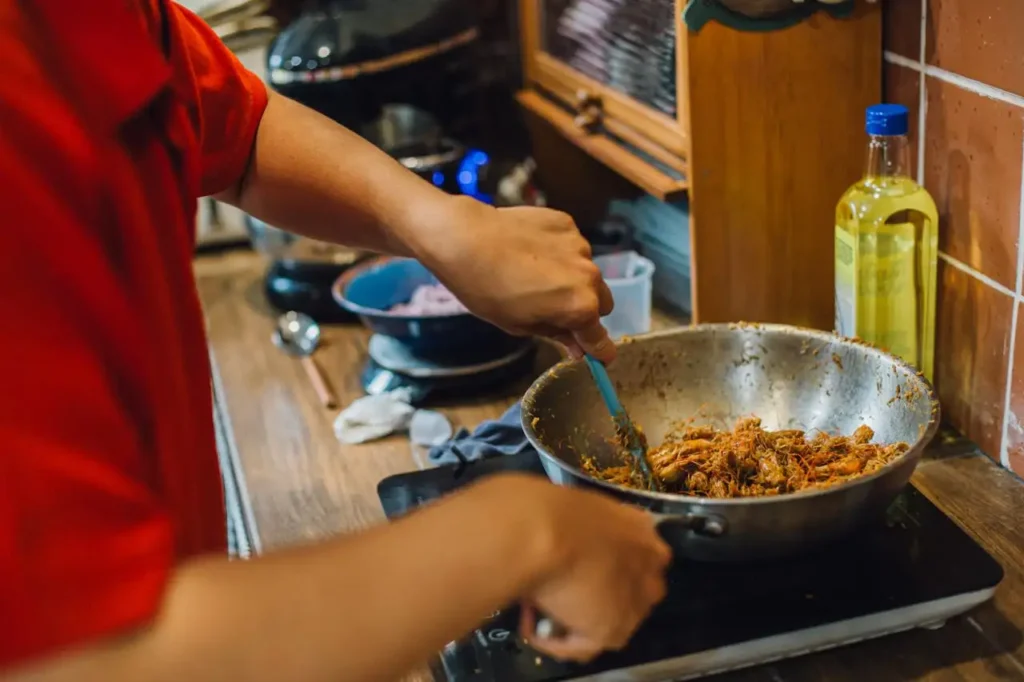
Your chicken is fused to the pan. Not sticking a little. Completely bonded to the surface like you planned it that way. The cooking mistakes beginners make almost always come down to the same handful of things, but nobody explains the actual reason they ruin your food. You try to lift the chicken, the crust tears off, and what’s left doesn’t look anything like dinner.
Most posts hand you the same short list. Don’t overcrowd. Preheat your pan. Season your food. You read it, nod, and forget about it by Thursday. What those posts skip is the why: what’s physically happening to your food when it goes wrong. This post covers 10 of the most common mistakes, and for each one I’ll give you the real mechanism. Once you understand that, the fix actually sticks. (And your chicken won’t.)
Table of Contents :
Why Your Food Sticks to the Pan (And How to Actually Fix It)
The real reason food sticks isn’t too little oil. It’s moisture, and once you understand that, the fix is simple.
When you place cold or wet protein in a pan, the surface moisture hits the hot metal and instantly vaporizes into steam. That steam physically lifts the meat off the pan surface. Here’s the part most home cooks never hear: that steam barrier collapses before the protein has had enough time to go through its natural release. The meat bonds to the metal, and when you try to move it, it tears.
Two things make this worse. Cold protein straight from the fridge brings a lot of surface moisture with it. Protein that wasn’t patted dry does the same thing. Even a properly preheated pan at around 400 to 450°F (204 to 232°C) can’t overcome wet or ice-cold protein going in.
The fix is straightforward in practice, even if the reason wasn’t obvious. Pat protein dry with paper towels before it touches the pan. Pull it from the fridge 15 to 20 minutes before cooking so the surface isn’t ice cold. Preheat your pan on medium-high for at least 2 to 3 minutes before anything goes near it. And once the food is in, leave it alone. It’ll tell you when it’s ready: try to lift it, and if it resists and tears, the steam-bond hasn’t released yet. Leave it for 30 to 60 more seconds. When it comes up clean, it’s done. ALWAYS let the protein tell you, not the clock.
(I spent a long time adding more oil instead of figuring this out. More oil doesn’t fix moisture. It just makes things greasy and stuck at the same time.)
Why Does My Food Come Out Soggy Instead of Crispy?
Soggy food usually means your pan quietly became a steamer without you realizing it.
When you crowd a pan, every piece of food releases moisture as it heats. On a properly loaded pan, that moisture evaporates off the hot surface fast enough that you get browning. But when the pan is packed, moisture builds faster than it can escape. It pools as trapped steam, and the food sits in that steam instead of searing. The result is pale, soft, and not what you wanted.
The visual cue is easy to recognize once you know it. Food hitting a properly hot, uncrowded pan should sizzle loudly on contact. If the sizzle sounds weak or delayed, the pan is either too cold or too full, and you’re already heading toward steam territory.
Cook in batches. One single layer, with visible space between each piece. (Yes, it feels slower. It’s actually faster once you account for the pale, limp food you’d otherwise have to either fix or just eat quietly.)
10 Mistakes to Stop Making Right Now
These are the cooking mistakes beginners make most often. Each one comes with the mechanism behind it so the fix makes actual sense.
Heat Mistakes
1. Starting with a cold pan
What happens: without a proper thermal layer on the surface, protein bonds to the metal immediately on contact. Preheat on medium or medium-high for 2 to 3 minutes before anything goes in. Stainless steel needs the full 3 minutes.
Quick Fix: Flick a single drop of water into the pan. It should evaporate instantly with a sharp hiss. If it just sits there and simmers quietly, give it another minute.
2. Overcrowding the pan
What happens: moisture can’t evaporate fast enough and the food steams instead of sears. One layer with space between pieces, every time.
Quick Fix: If the pan looks full, it is full. Move half the food to a plate and cook in two rounds.
3. Using the wrong heat level
What happens: the Maillard reaction that creates browning and flavor needs a surface temperature of around 400 to 450°F to kick in. Too low and you get pale, gray food. Too high and the outside burns before the inside finishes.
Quick Fix: Medium-high for searing protein. Medium for cooking through. Low for sauces and anything that needs time.
4. Not resting meat after cooking
What happens: muscle fibers contract under heat, and the juices pool in the center of the meat. Cut immediately and those juices run straight out onto the board. Resting lets the fibers relax and pull the liquid back in. I ruined more than a few steaks cutting into them too early before I finally accepted this wasn’t optional. Rest thin steaks (under 1 inch) for 3 to 5 minutes. Steaks 1 to 2 inches thick need 5 to 10 minutes. A whole chicken needs 15 minutes. Large roasts need 20 to 30 minutes.
Quick Fix: Tent it loosely with foil while it rests. The crust holds and the internal heat keeps carrying.
5. Not checking internal temperature for poultry
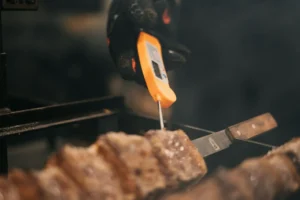
What happens: poultry must reach 165°F internally to be safe, and cutting it open to check color isn’t reliable enough. Pink can still be safe. White can mean it’s overdone.
Quick Fix: A basic instant-read thermometer removes all guesswork. Insert it into the thickest part, away from the bone.
Seasoning Mistakes
6. Salting only at the end
What happens: salt added only at the end sits on top of the food and tastes sharp and separate. Salt added earlier penetrates as the food cooks and integrates into the flavor of the dish. This single gap explains a lot of the difference between food that tastes flat and food that actually tastes like something.
Quick Fix: Season your protein before it hits the pan. Season vegetables before they go in the oven. Taste and adjust at the end, but never start there.
7. Under-salting across the board
What happens: salt isn’t just about salt flavor. It makes every other flavor in the dish more present. Food that isn’t seasoned at any point will taste flat no matter how solid the technique is. If you want a deeper breakdown of when and how to add salt, acid, and fat at each stage of cooking, there’s a full guide on seasoning food throughout the cooking process that covers exactly this.
Quick Fix: Season more than feels comfortable at first. Taste as you go. The goal is for the food to taste like itself, but more so.
8. Forgetting acid
What happens: a dish that tastes almost right but still somehow flat usually needs acid, not more salt. A squeeze of lemon, a splash of vinegar, or anything bright can shift the whole finish of the dish.
Quick Fix: Before adding more salt to a finished dish, try a small squeeze of lemon first. It works more often than people expect.
9. Moving food constantly
The crust needs contact time with the hot surface to actually build. Every time you nudge things around, you’re resetting the process. Put it in the pan, set a timer, and walk away. The food is not going anywhere.
Quick Fix: Once food goes in, don’t touch it until the timer goes off. Trust the process.
10. Starting to cook before you’re ready
If you add garlic when the pan is already smoking, forget an ingredient halfway through, or have to pull the chicken off the heat to go find the thermometer, the timing falls apart. (More on this in the next section.)
Quick Fix: Read the full recipe once before anything gets prepped. Know what happens when before the burner goes on.
What Happens Inside the Pan When You Get It Right
Here’s a perfect sear from the food’s point of view, step by step.
The pan sits on medium-high heat for three minutes. The metal absorbs and distributes energy until the surface reaches around 400 to 450°F (204 to 232°C). You pat the chicken dry and lay it in the pan. The small amount of remaining surface moisture vaporizes fast enough that it doesn’t build a barrier. The proteins at the very surface of the meat start changing structure on contact with the hot metal.
The Maillard reaction begins at around 285°F (140°C) at the food’s surface and reaches its peak somewhere between 330 and 390°F (165 to 200°C). This is the reaction that creates browning, the golden crust, and hundreds of flavor compounds at once. It’s not burning. Burning is charring from excess heat. The Maillard reaction is a chemical transformation between amino acids and sugars that produces the color and complexity you’re actually going for.
You don’t move it. Contact time is the whole mechanism. After two to three minutes, the protein has gone through enough of the reaction that it releases naturally from the surface. You try to lift it, and it comes up clean. If it doesn’t, give it 30 to 60 more seconds. When you flip it, the cooked side is golden and the pan is still hot. The second side will cook faster because the internal temperature is already rising.
No mystery. Just time, temperature, and getting out of the way.
The One Habit That Will Fix Half These Mistakes Overnight
Mise en place, which just means “everything in its place,” is the single prep habit that eliminates most beginner errors before they start.
At its most basic, it means reading the full recipe before you touch anything, then prepping and measuring every ingredient before the burner goes on. No chopping the onion while the garlic is already burning. No scrambling for the lid while the pan smokes. Everything is ready, so cooking is just cooking.
What I do now is spend 10 minutes prepping before I turn on any heat. It sounds like it adds time, but it removes the time you’d spend recovering from mistakes that could have been prevented. The first time I cooked a proper stir-fry with everything prepped beforehand, I remember thinking: oh, so that’s why this always tasted wrong. The heat is too fast for mid-recipe scrambling. Mise en place turns a stressful process into something close to calm.
For beginners, this one habit fixes the burnt garlic (you add it in order, not in panic), the overcrowded pan (you portioned the chicken before it hit the heat), the forgotten salt, and a good portion of the mistakes on the list above. It’s not glamorous advice, lol. But it’s the change that made the single biggest difference for me.
If heat control itself is the thing you want to dig into next, there’s a full guide on stovetop heat control that covers reading your burner levels, knowing when to switch from high to low, and how to adjust on the fly.
You Can Check Also :
How to Cook Chicken Perfectly Every Time (Juicy, Tender & Never Dry)
How to Read a Recipe Properly Before Cooking (Avoid Common Mistakes)
Frequently Asked Questions
How do I keep chicken from sticking to the pan without using tons of oil?
Dry the surface, don’t add more oil. Pat the chicken dry with paper towels before it goes in the pan, and make sure the pan is fully preheated (2 to 3 minutes on medium-high) before anything touches it. Wet protein on an underheated pan is the actual problem, and more oil won’t fix either of those two things.
Can you fix a dish that’s been oversalted?
Yes, sometimes. Adding an unsalted starchy component like plain rice, extra pasta, or a potato absorbs some of the salt. Diluting with more unsalted liquid helps too, and a splash of acid like lemon juice can rebalance how the saltiness reads overall. That said, if the dish is extremely oversalted, full recovery is hard. The real fix is tasting early, before the salt becomes irreversible.
Does adding more oil to the pan stop food from burning?
No. Burning almost always comes from heat that’s too high or food left unattended too long, not too little oil. More oil at the wrong temperature can actually make sticking worse by interfering with the surface contact the protein needs to release cleanly. If something is burning, lower the heat or move the pan off the burner for 30 seconds before you continue.
How long should you actually let a pan heat up before cooking?
For most pans on medium heat, 2 to 3 minutes is the target. Stainless steel tends toward the 3-minute end because it takes longer to distribute heat evenly across the surface. The water-drop test is the most reliable check: a single drop should bead up and skitter. If it just evaporates flat, the pan needs more time. Never preheat a nonstick pan empty on high heat.
Why does my food always come out soggy when I’m trying to get it crispy?
Soggy results almost always come from one of three things: too much food in the pan at once (steam can’t escape fast enough), food that went in wet, or heat that’s too low. The check is the sizzle on contact. If it’s quiet or delayed, you’re already in steam territory. Fix one of those three things first.
Once you understand what’s happening in your pan, cooking stops feeling like guesswork. The mistakes have real causes, which means they have real fixes. If one of these is the thing that finally clicked for you, drop it in the comments — I’d love to know which one.
Did you love this recipe?
Share it with your friends & family!
Leave a Comment