
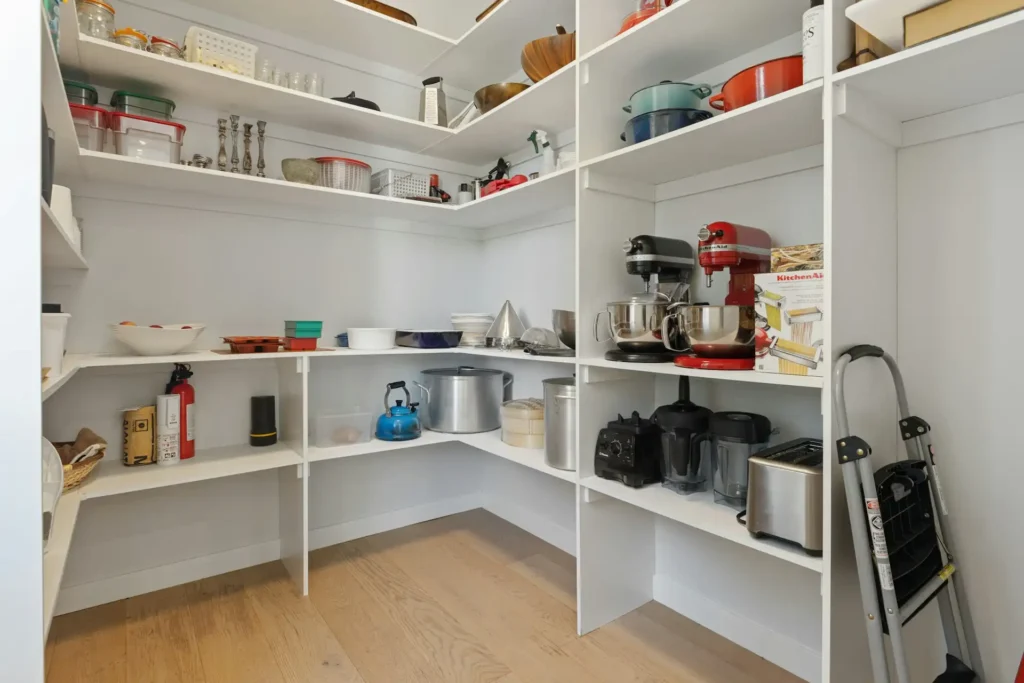
How to Organize Your Kitchen Pantry (A Simple System That Actually Sticks)
For two years, I kept buying smoked paprika. Not because I ran out, but because every time I needed it, I couldn’t find it, assumed I was out, and grabbed another tin at the store. At one point I had four. That’s when I finally admitted that knowing how to organize your kitchen pantry wasn’t optional anymore, it was costing me actual money.
The pantry isn’t a storage problem. It’s a visibility problem. And most organizing advice treats it like a design project when it’s really a workflow problem.
Table of Contents :
Why Your Pantry Keeps Falling Apart (Even After You Tidy It)
Most pantry resets fail within three weeks. I know because I failed that way twice before I figured out why.
The issue isn’t motivation. It’s that people organize for the clean version of their life, not the rushed Tuesday night version. You build a beautiful system with matching containers and labels, and then at 6:30pm when you’re trying to get dinner on the table, you just shove the pasta back wherever.
The fix is designing around how you actually move in the kitchen, not how you wish you did. That means zones based on cooking frequency, not category. Things you touch every day need to be at eye level and within arm’s reach. Things you use once a month can live on the top shelf or in the back.
Quick Fix: Before buying a single bin or label, spend five minutes writing down the ten ingredients you reach for most on a weeknight. Those ten things should be the easiest to grab in your entire pantry. Everything else works around them.
How to Organize Your Kitchen Pantry Step by Step
This is the actual process I follow when I reset my pantry from scratch. It takes about two hours and it holds up.
- Pull everything out. All of it. Put it on your kitchen table or counter. This feels dramatic but it’s the only way to see what you actually have. You’ll find duplicates, expired things, and stuff you forgot existed.
- Sort by expiration first, not category. Toss anything past date. Check anything that’s been opened, especially spices and oils. Oils go rancid faster than most people expect, and rancid oil will ruin a dish even in small amounts.
- Group what’s left by how you cook, not what it is. Baking supplies together, weeknight dinner staples together, snacks together. The goal is that everything related to one cooking task lives near everything else for that task.
- Assign zones by frequency. Eye level for daily items. Waist to knee for heavier things you grab weekly (canned goods, bags of rice). Top shelf for rarely used items. Bottom shelf for bulk or overflow.
- Put things back with the front-facing rule. Labels forward, shortest items in front. Not for aesthetics. Because the moment something gets hidden behind another thing, it functionally doesn’t exist anymore.
- Do a one-week trial before you buy anything. Live with the new layout for seven days before spending money on containers or organizers. The gaps you notice in a real week of cooking are more valuable than any planning session.
The Deep Shelf Problem Nobody Talks About
Here’s something I’ve never seen covered in another pantry article, and it took me years of losing things to figure it out.
Deep shelves don’t fail because of bad organization. They fail because of category mixing at depth. The problem is that you put a can of tomatoes at the back, then another one in front, and they look like the same “zone” but six months later you’ve got a can of chickpeas hiding behind a box of couscous behind a jar of tahini and none of them feel related to each other.
The fix isn’t bins, though bins help. It’s column thinking instead of row thinking. Instead of filling a shelf left to right in rows, assign each column of depth to one category. The left column is all canned tomatoes and tomato paste. The next column is all beans. You can go three cans deep in each column and still pull from the front without losing track of what’s behind it.
This also works incredibly well if you’re trying to figure out how to organize a small pantry with deep shelves, because it means you’re actually using that depth without it becoming a black hole.
How to Organize Your Pantry Without Buying Anything
I spent about $80 on a pantry organizing set in 2019. Within four months, the system was worse than before because the bins had fixed sizes that didn’t match my actual grocery patterns.
You don’t need containers to have an organized pantry. What you need is edge discipline, which is my own term for something nobody told me but changed how I shop.
The idea: every category in your pantry has a physical boundary, usually the edge of a shelf section or a piece of masking tape. When items start spilling past that edge into another category’s space, that’s your signal to shop that category down before buying more. It turns your pantry layout into a passive inventory system.
Masking tape and a marker. That’s it. Works in any cabinet, any rental, any Ikea Kallax unit. If you’re trying to do pantry organization without spending money, this is the whole system.
What I do now: I put a small piece of tape vertically between my canned goods and my dry goods section. When the canned goods start creeping past the tape, I know I’m overstocked and I plan meals that use them before I buy more.
Spices Are a Separate Problem and Need a Separate Solution
Every pantry organizing article lumps spices in with the general system. They shouldn’t be, because spices fail differently.
The real issue with spices isn’t alphabetical order or drawer organizers. It’s surface area exposure over time. Ground spices lose potency because of oxidation, which means the moment you open the jar and close it again, the clock is ticking. Most ground spices are genuinely past their best at about 12 months after opening, not the printed date on the bottom, which often just reflects manufacture or packaging.
The discovery that changed how I store spices: I started keeping a small piece of tape on each jar with the month and year I opened it. Not bought it, opened it. That tape has saved me from countless flat, dusty dishes. When I pull a jar and see it’s been open 14 months, I smell it before I use it. If it smells like dust instead of the actual spice, it goes in the bin.
This is especially worth doing if you organize your pantry by category and your spices end up on a back shelf. Out of sight means you forget them, and forgotten spices are usually dead spices.
The Real Reason Most People Re-Clutter Within a Month
There’s a psychology thing happening in cluttered pantries that nobody talks about in organizing content, and it’s this: visual noise creates decision fatigue, and decision fatigue leads to avoidance, and avoidance leads to shoving.
When you open a pantry and see twelve different things competing for your attention, your brain does the fast option, which is put the thing in your hand somewhere, anywhere. That’s not laziness. It’s a completely rational response to a cognitively expensive environment.
The fix is reducing the number of visible decisions. That’s why grouping by cooking task (not just category) works better than alphabetical or type-based systems. When you’re making pasta, you look at the pasta zone and you see: pasta, canned tomatoes, olive oil nearby. Your brain doesn’t have to search or categorize. It just reaches.
Fewer decisions at 6:30pm means the system actually gets maintained. It sounds like an organizing tip but it’s really a cognitive load tip.
You Can Check Also :
How to Cook Chicken Perfectly Every Time (Juicy, Tender & Never Dry)
10 Common Cooking Mistakes Beginners Make (And How to Fix Them Fast)
How to Read a Recipe Properly Before Cooking (Avoid Common Mistakes)
FAQ
How do I organize my kitchen pantry if I have very little space?
Start with frequency, not size. Put your ten most-used items at eye level and in front, regardless of how small the space is. Vertical risers can double your usable shelf space in a small cabinet, and column-based organization (grouping by depth rather than rows) helps you use deep shelves without losing things in the back.
Do I need matching containers to have an organized pantry?
No. Matching containers look clean but they’re not what makes a system work. Clear containers help because you can see quantities at a glance, but a consistent zoning system with original packaging works just as well. Many cooks find that buying containers before testing their layout leads to the wrong sizes for their actual grocery patterns.
Should spices be stored alphabetically?
Alphabetical order is less useful than it sounds. The more effective approach is grouping spices by cuisine or cooking type (baking spices together, Mexican-cooking spices together, everyday savory seasonings together). You’ll almost always reach for spices in cooking-context clusters, not alphabetically, so organizing around how you actually cook is faster in practice.
How often should I reorganize my pantry?
A full reset twice a year is usually enough for most home cooks. A light refresh, meaning pulling things forward, checking dates, and restoring zones, works well every four to six weeks. The twice-yearly full pull-out is when you catch expired items, consolidate duplicates, and adjust zones if your cooking habits have changed.
Why does my pantry get messy again so fast after I organize it?
The most common reason is that the system was designed for ideal conditions, not real weeknight conditions. If the “correct” place to put something requires more than two seconds of thought or adjustment, it won’t happen consistently. The fix is to make the right place the easiest place: zones at the right height, no lids to remove, nothing stacked more than two deep for daily items.
Did you love this recipe?
Share it with your friends & family!
Leave a Comment