
How to Cook Fish Fillets Without Overcooking (Perfectly Tender Every Time)
The first time I ruined a beautiful piece of salmon, it wasn’t because I did anything dramatic. I just walked away for two minutes. Came back, poked it, and that soft translucent flesh had turned into something dense and chalky. Knowing how to cook fish fillets without overcooking is genuinely one of those skills that separates frustrating results from meals you’re proud of, and the gap between the two is smaller than you’d think.
The problem isn’t that fish is hard. It’s that fish is fast. And most of us learned to cook things that tell you when they’re done. Fish doesn’t yell. You have to learn to listen differently.
Table of Contents :
Why Fish Overcooks So Easily (and What’s Actually Happening)
Here’s the food science part, and I promise it’s worth knowing.
Fish muscle fibers are short, loosely connected, and contain very little connective tissue compared to chicken or beef. That’s exactly why fish flakes so beautifully when it’s cooked right. But it also means heat moves through it fast and the proteins tighten up quickly. Once they tighten past a certain point, they start squeezing out moisture, and that’s when you get the dry, rubbery texture everyone’s trying to avoid.
The window between “just right” and “overcooked” in a thin fillet can be as little as 60 to 90 seconds over high heat. For context, that’s about the time it takes to check your phone or give the pan a quick wipe down. That’s not a lot of margin.
The USDA recommends cooking fish to an internal temperature of 145°F, measured at the thickest part. In practice, a lot of cooks pull delicate fillets at around 130 to 135°F and let carryover heat finish the job, especially for thick cuts like salmon. That’s a personal call based on your comfort level, but understanding that carryover cooking is real is important. The fish keeps cooking after it leaves the heat.
How to Cook Fish Fillets in a Pan Without Drying Them Out
This is where most home cooks lose the battle, and it usually comes down to three things: a cold pan, wet fish, or moving it around too much.
Dry the fillet before it hits the pan.
I mean really dry it, with paper towels, pressing gently on both sides. Moisture on the surface creates steam, and steam prevents browning. More importantly, it drops the surface temperature of your oil, which slows down the Maillard reaction that gives you that golden crust. Wet fish in a hot pan doesn’t sear. It steams from the outside in, which means it’s already starting to overcook before you’ve even gotten color on it.
Get your pan properly hot before adding oil.
Not smoking, but genuinely hot. A drop of water should evaporate on contact immediately. Then add your oil (something with a decent smoke point, like avocado or a light olive oil), let it shimmer, and then lay the fillet in away from you. You should hear a real sizzle. If it’s quiet, the pan isn’t ready.
Here’s what I do now, after a lot of trial and error: I cook fish in a pan almost exclusively with the two-thirds rule. Two-thirds of the cooking time on the first side, flip once, finish the rest. For a fillet about an inch thick, that’s roughly three to four minutes on the first side over medium-high heat, then one to two minutes on the second. Don’t touch it in between. Resist. The fillet will naturally release from the pan when it’s ready to flip. If it’s sticking, it’s not ready.
Quick Fix: If your fish is sticking and you’re not sure whether to flip, wait 30 more seconds. A properly seared fillet releases on its own when the crust has formed. Forcing it breaks the fish and takes the crust with it.
The One Step That Changes Everything When Cooking Fish Fillet in a Pan
This is the part other articles don’t usually talk about, and honestly it took me an embarrassing amount of time to figure out.
Bring your fish close to room temperature before cooking. Not all the way, just 10 to 15 minutes out of the fridge on the counter is enough.
Here’s why this matters so much. A cold fillet, pulled straight from the refrigerator, creates a temperature gradient problem. By the time the center of the fillet reaches safe temperature, the outside has been exposed to heat for significantly longer. The edges and thinner parts overcook while the thick center catches up. It’s physics, not bad luck.
I started doing this after I noticed that the fillets I cooked on rushed weeknights (straight from fridge to pan) were consistently worse than the ones I made when I had a bit more time. Same technique, same pan, different result. The only variable was fridge-to-pan time. Now I take the fish out first, before I even prep anything else, and it’s made a real difference.
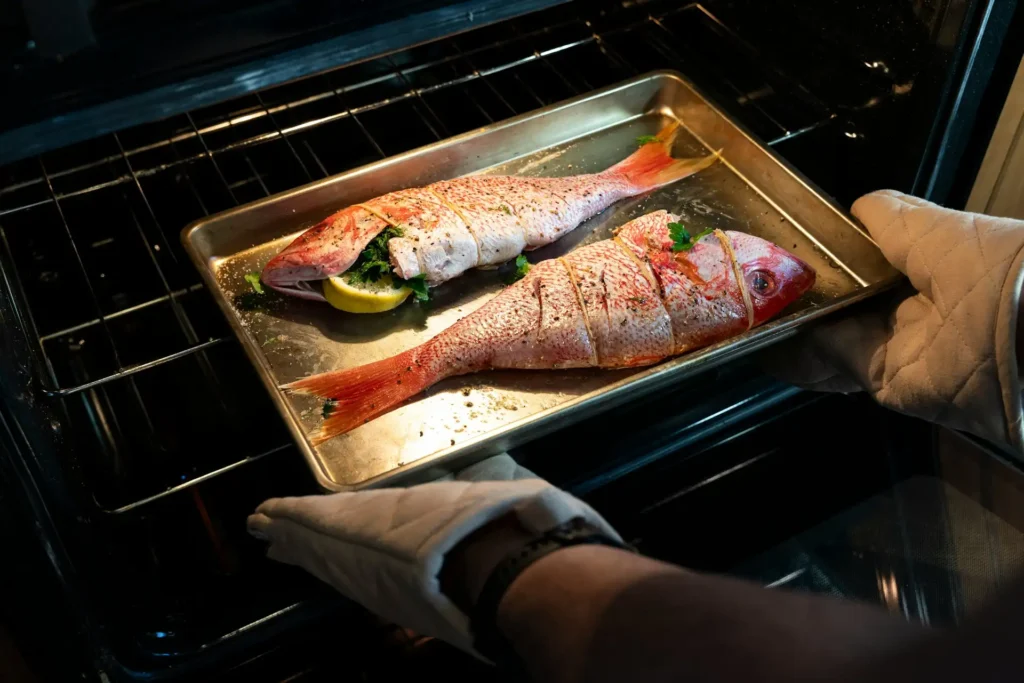
How to Cook Fish in the Oven Without Overcooking It
Oven cooking gives you more control than stovetop, which is why it’s a great option if you’re still building confidence.
- Preheat your oven to 400°F. This temperature is hot enough to cook fish efficiently without drying it out.
- Pat your fillet dry, season it, and place it on a lightly oiled baking sheet or in an oven-safe dish.
- For fillets about one inch thick, roast for 8 to 10 minutes. Do not flip. The dry oven heat will cook it through from all sides.
- Start checking at the 8-minute mark by pressing gently on the thickest part. It should yield slightly but feel firm, not soft and raw, not rigid and dry.
- Pull it from the oven when the flesh just starts to separate into flakes when you press. If you wait until it’s fully flaked, it’s already past the best moment.
One thing worth knowing about oven cooking: lining your baking dish with foil and adding a small splash of white wine, broth, or even just water creates a micro-steam environment. This is particularly useful for lean, delicate fish like tilapia or cod that can dry out faster. Fatty fish like salmon do fine without it.
A Tale of Two Fillets (Or: Why Thickness Changes Everything)
Let me tell you about a dinner party disaster that taught me something I now consider essential knowledge.
I had two fillets, both labeled “salmon,” both from the same market trip. One was about an inch and a half thick through the center. The other was a tail piece, thin and tapered on one end to maybe a quarter inch. I treated them exactly the same. Same heat, same timing, same pan.
The tail piece was overcooked in the first three minutes. The thick center piece was still raw. I served both to guests with a completely straight face and told myself the sauce would cover it. It did not.
What I learned: thin sections of a fillet cook at a completely different rate than thick ones. If you’re working with an unevenly shaped piece, you have options. You can fold the thin tail end under itself to create more even thickness before cooking. You can cook the thick part most of the way and add the thinner piece halfway through. Or you can score the thick part shallowly with a knife, which helps heat penetrate faster without cutting all the way through.
No other technique article I’ve read covers this specifically. They all assume a uniform fillet, and real fish rarely cooperates.
Cooking Fish Fillet With Sauce Without Turning It to Mush
Sauce is where a lot of people accidentally finish what the heat started.
The mistake is adding sauce too early, especially acidic sauces. Acid (lemon juice, wine, tomatoes) denatures fish proteins, similar to what heat does. It’s actually the science behind ceviche, where fish “cooks” in citrus without any heat at all. Pour a lemon butter sauce over fish too early in the cooking process and you’re combining two denaturing forces at once. The fish tightens up fast.
The fix is to cook the fish fully, rest it for a minute off the heat, and then add or pour your sauce. If you’re making a pan sauce in the same skillet, take the fish out, make your sauce, and spoon it over at the table. The residual heat from the plate is gentle enough to warm the sauce without doing anything damaging to the fish.
For cream-based or butter sauces, a small knob of cold butter whisked in at the end off the heat gives you a glossy, cohesive sauce that doesn’t break. This is a basic French technique but it’s genuinely useful here.
FAQ
How do I know when fish fillets are done without cutting them open?
Press the thickest part gently with your finger or a fork. Properly cooked fish will feel firm but still give slightly, and the flesh will just begin to separate into flakes. If it feels completely rigid or has turned white and opaque all the way through with no translucency at the center, it’s likely overcooked.
Can you cook fish fillet without flour or coating?
Yes, and in many cases it gives you a cleaner result. Flour creates a barrier that traps steam, which can soften a sear rather than crispen it. Without coating, you need a properly hot, lightly oiled pan and dry fish, but the direct contact between fish and pan produces excellent browning and more delicate texture.
Does resting fish after cooking actually matter?
It does, though the window is short. One to two minutes of resting off the heat allows carryover cooking to complete and juices to redistribute slightly. More than that, and the fish goes cold fast. Pull it a degree or two before your target temperature if you’re using a thermometer, since it will continue to rise off the heat.
How long should I cook a fish fillet in a pan?
For a one-inch thick fillet over medium-high heat, cook three to four minutes on the first side and one to two minutes after flipping. Thinner fillets (half an inch or less) may only need two minutes total. Timing varies by thickness, fish type, and how hot your pan runs, so use visual and tactile cues alongside time.
My fish always falls apart when I try to flip it. What am I doing wrong?
Usually this means you’re flipping too early. A properly seared fillet releases naturally from the pan when the crust has set. If it resists, give it another 30 to 60 seconds. Falling-apart fish can also mean the fillet is too thin for flipping, in which case you can skip the flip entirely and just cover the pan briefly to finish cooking the top with trapped heat.
You Can Check Also :
How to Cook Chicken Perfectly Every Time (Juicy, Tender & Never Dry)
10 Common Cooking Mistakes Beginners Make (And How to Fix Them Fast)
How to Read a Recipe Properly Before Cooking (Avoid Common Mistakes)
Once you stop overcooking fish, you’ll realize it’s actually one of the faster, easier proteins to work with. Most nights it’s on the table in under 15 minutes, and it’s genuinely hard to make boring when you’re not fighting dry, rubbery texture anymore.
Did you love this recipe?
Share it with your friends & family!

Leave a Comment