I ruined dinner for eight people because I believed a recipe. It said “caramelize onions, about 10 minutes.” So I cranked the heat, watched them brown fast, and served what I confidently told everyone were caramelized onions. They were not. They were bitter, unevenly cooked, half-burnt scraps that tasted like regret. That was the night I finally looked into how long caramelized onions actually take, and the answer made me genuinely angry at food media.
The real number? Forty-five minutes to an hour. Sometimes longer. And once you understand why, you’ll never trust a 10-minute recipe again.
Table of Contents :
How Long Do Caramelized Onions Actually Take, and Why Does Everyone Lie?
Forty-five minutes is not a suggestion. It’s chemistry.
Onions are roughly 5% sugar by weight. When you apply low, steady heat, those sugars break down through a process called the Maillard reaction (for the browning) combined with actual caramelization of the sugars themselves. Both processes are slow. They can’t be rushed without changing what’s happening chemically, which means you stop getting deep, sweet, complex flavor and start getting acrid, sharp bitterness instead.
The reason so many recipes say 10-15 minutes is partly editorial laziness and partly because recipe developers sometimes write for optimism, not reality. High heat onions do turn brown quickly. They just turn brown the wrong way, scorching on the outside while the cellular structure inside hasn’t had time to fully break down and release its sugars properly.
So when someone asks how long to caramelize onions for burgers, or for a French onion soup, or for anything at all: give yourself an hour. Put on a podcast. This is not a weeknight side dish you improvise at 6pm.
What Do Caramelized Onions Look Like When They’re Actually Done?
This is where experience beats instructions every time, because the visual cues matter more than the clock.
Here’s what properly caramelized onions look like at each stage:
- 0-10 minutes: The onions are still mostly raw, softening and turning translucent. They’ll shrink noticeably. Nothing exciting yet.
- 10-25 minutes: They start going a light golden color. You’ll notice the bottom of the pan getting a sticky residue. This is good. This is flavor.
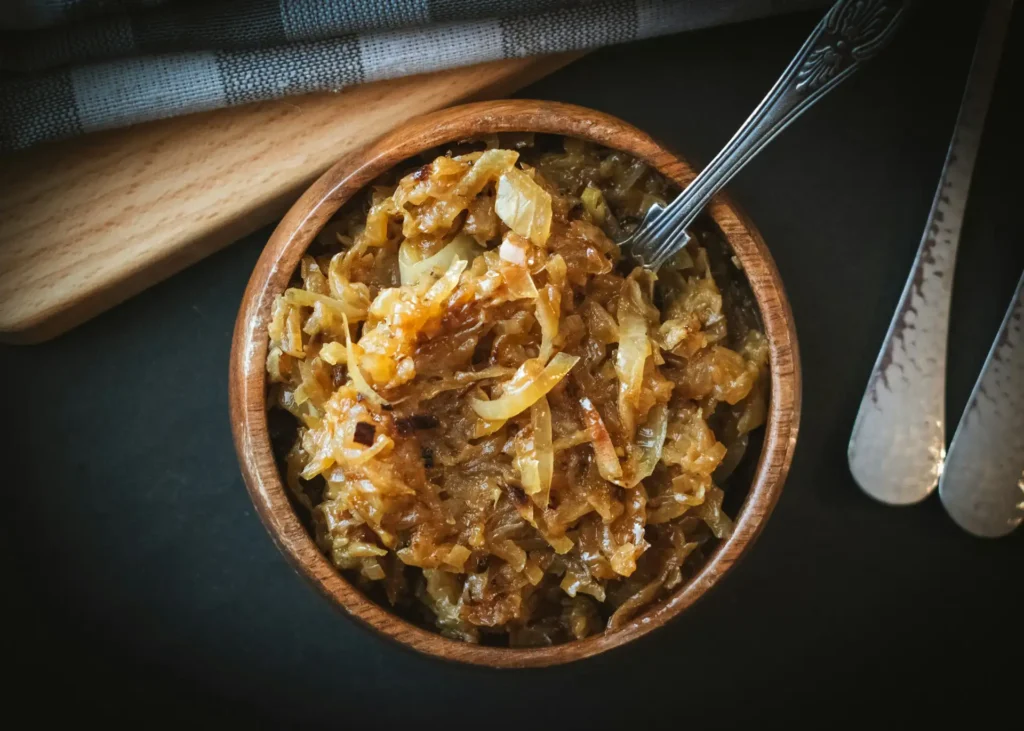
- 25-40 minutes: Deep golden-brown color, jammy texture. They should move in the pan almost like a slow, thick paste. The smell shifts from sharp and raw to sweet and almost nutty.
- 40-60 minutes: Rich mahogany color, fully collapsed, intensely sweet. This is the finish line. They should taste like concentrated onion candy, not like onions at all.
If yours are still pale and stringy at 30 minutes, you’re not done. If they’re dark brown with crisp edges before 30 minutes, your heat is too high.
Quick Fix: If your onions look done but taste sharp or bitter, add a small splash of water or broth, stir, and keep cooking on low for another 10 minutes. The liquid lifts the fond from the pan and the continued cooking develops sweetness that wasn’t there yet.
The Stirring Schedule Nobody Talks About
Here’s the insight I haven’t seen explained anywhere else: how often you stir caramelized onions changes the flavor, not just the texture.
In the first 20 minutes, stir every 4-5 minutes. The onions are still releasing water, and you mostly want to prevent sticking. During this phase, more frequent stirring is fine.
But from minute 20 onward, stop stirring so often. Every 8-10 minutes is enough. Here’s why: the flavor compounds you want, particularly the sulfur-based ones that transform into sweet molecules, develop partly through contact with the hot pan surface. If you’re constantly moving the onions, you’re interrupting that contact. You’re essentially cooling the pan repeatedly and preventing the deep flavor development that makes caramelized onions worth the effort.
I started leaving mine alone more after a batch I forgot about, genuinely walked away and got distracted, came back to find them more deeply flavored than any batch I’d carefully tended. That wasn’t an accident. It was the pan doing its job without my interference.
The trade-off is a slightly higher risk of scorching on the bottom. So when you do stir, scrape the bottom thoroughly and make sure nothing is sticking and burning, then leave it alone again.
Can You Make Quick Caramelized Onions That Actually Work?
Honestly? Sort of. But you need to be honest about what you’re making.
The baking soda shortcut is real. Adding about a quarter teaspoon of baking soda to your onions early in the process raises the pH, which speeds up the Maillard reaction significantly. You can get deep color in 20-25 minutes this way. I’ve used it.
The problem is texture and flavor depth. Baking soda also breaks down the pectin in the onion cells faster, which makes them mushy rather than jammy. And the flavor, while good, lacks the complexity of the slow version. They taste caramelized but not developed, if that distinction makes sense.
For caramelized onions for burgers or pizza, where they’re one component of many flavors, the quick version works. For French onion soup or a tart where they’re the main event, take the full hour.
How Long Do Caramelized Onions in the Oven Take, and Is It Worth It?
The oven method is underused and genuinely excellent for large batches.
Set your oven to 375°F (190°C), use a heavy covered Dutch oven, and plan for about 75-90 minutes total with a stir every 20 minutes or so. The enclosed environment traps steam in the early stages (which helps the onions soften evenly without burning) and then you remove the lid for the last 20-30 minutes to let liquid evaporate and color develop.
What the oven does better than stovetop: even heat from all sides means far less risk of scorching in one spot while another spot is undercooked. For three or four pounds of onions, the oven is actually easier and more forgiving than babysitting a skillet.
The tradeoff is you get slightly less control over the final texture, and the fond that develops in a skillet, that sticky caramelized residue you deglaze with wine or stock, is harder to work with in a Dutch oven.
How Long Do Caramelized Onions Last Once You’ve Made Them?
All that time investment should buy you more than one meal. Good news: it does.
Stored in an airtight container in the fridge, properly caramelized onions last 7-10 days easily. Their sugar content and the reduction of water through cooking actually makes them fairly shelf-stable compared to raw onions. In the freezer, they last up to three months. I freeze them in tablespoon-sized portions in an ice cube tray, then transfer to a bag, so I can grab exactly what I need.
The one thing that shortens their life is not cooking them fully. Onions that still have a lot of moisture in them will go off faster. This is another reason the full cook time matters, beyond just flavor.
What I Do Now: I make a big batch every 10 days or so, usually on a Sunday when I don’t mind having something on the stove for an hour. Two pounds of raw onions cooks down to about a cup and a half of finished product, which sounds discouraging until you realize how concentrated the flavor is. A tablespoon does more work than you’d expect.
Food safety storage guidelines from a credible food science source
FAQ
How long do caramelized onions take to make properly?
Caramelized onions take 45 minutes to 1 hour over low to medium-low heat. Recipes claiming 10-15 minutes produce browned onions, not truly caramelized ones. The slow cook time is necessary for the sugars to fully break down and develop their signature sweetness.
Can you caramelize onions in less time without ruining them?
Yes, but with trade-offs. Adding a quarter teaspoon of baking soda per pound of onions speeds up the Maillard reaction and gets you deep color in 20-25 minutes. The texture becomes softer and the flavor is less complex, but it’s a workable shortcut when onions are a supporting ingredient rather than the main flavor.
Do I need to stir caramelized onions constantly?
No, constant stirring actually works against you. Stir every 4-5 minutes in the first 20 minutes while the onions release water, then reduce to every 8-10 minutes. Frequent stirring prevents the onions from making prolonged contact with the hot pan, which is where the deeper flavor compounds develop.
How long do caramelized onions last in the fridge?
Properly caramelized onions last 7-10 days in an airtight container in the refrigerator, and up to 3 months in the freezer. Their low moisture content after cooking makes them more shelf-stable than you might expect. Partially cooked onions that still hold a lot of moisture will spoil faster.
My caramelized onions turned dark and bitter, what went wrong?
Dark and bitter usually means the heat was too high at some point, which scorched the sugars rather than gently breaking them down. If your onions color faster than 25-30 minutes on the stovetop, lower the heat immediately. If there are burnt bits on the pan, add a splash of water and stir to lift them before they turn the whole batch bitter.
You Can Check Also :
How to Cook Chicken Perfectly Every Time (Juicy, Tender & Never Dry)
10 Common Cooking Mistakes Beginners Make (And How to Fix Them Fast)
How to Read a Recipe Properly Before Cooking (Avoid Common Mistakes)
Once you stop trying to rush them, something shifts. You stop seeing caramelized onions as a step in a recipe and start seeing them as an ingredient you keep on hand, one that makes everything from scrambled eggs to cheap pasta taste like you actually tried. That’s worth the hour.