
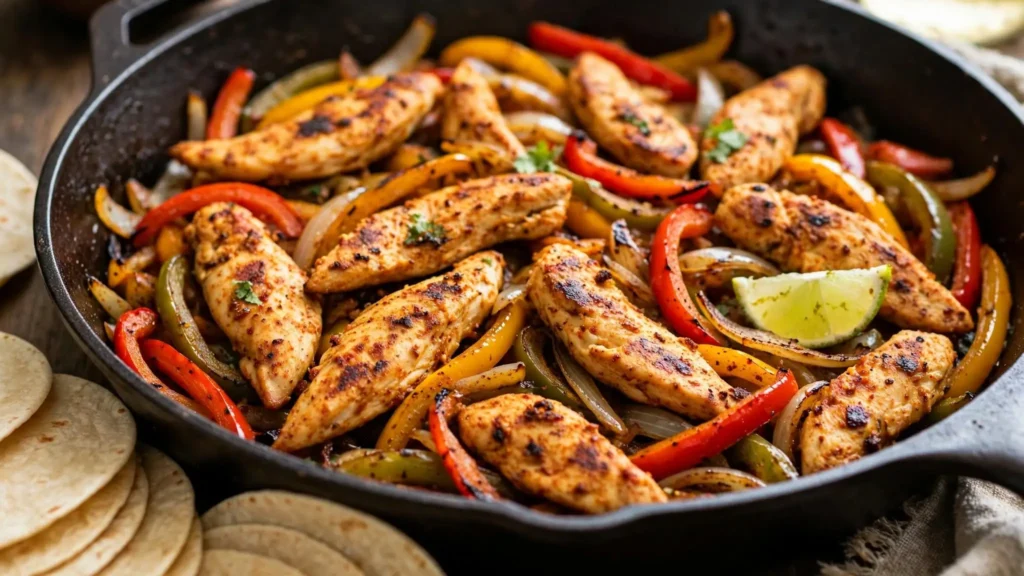
20-Minute Chicken Fajita Skillet (One Pan)
A good chicken fajita skillet sounds like a hot pan: chicken that sizzles the moment it lands, peppers with a few dark spots on their edges, and nothing swimming in liquid. A rushed version tends to go the other way, with pale chicken sitting in a pool of pepper juice.
This recipe gets dinner on the table in 20 minutes using one skillet. Two decisions keep it on the right side of that line: how much room the chicken gets, and when it leaves the pan. Both are explained below, along with how to tell when the chicken and vegetables are done.
This is a stovetop fajita skillet, not a baked fajita casserole. The chicken and vegetables are sautéed quickly over medium-high heat and served in warm tortillas.
Why You’ll Like This Recipe
- One pan. Everything cooks in a single 12-inch skillet, so cleanup is short.
- Fast by design. Thin chicken strips and a dry spice rub (no marinating time) keep the whole recipe at 20 minutes.
- Clear doneness cues. You get a temperature for the chicken and a visual target for the vegetables, instead of “cook until done.”
- Easy to prep ahead. The vegetables can be sliced and the spices mixed in advance, then cooked just before serving.
Quick Recipe Snapshot
- Prep time: 8 minutes
- Cook time: 12 minutes
- Total time: 20 minutes
- Servings: 4
- Category: Dinner
- Cuisine: Tex-Mex
What Matters Most for This Recipe
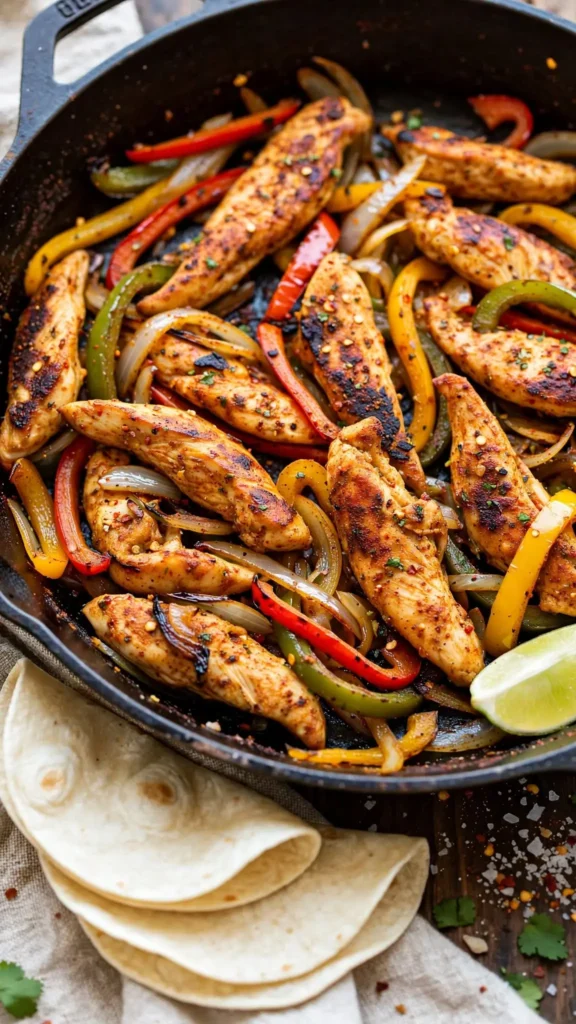
Whether you end up with fajitas or steamed chicken and peppers comes down to pan size and spacing.
Use a wide skillet and keep the chicken in a single layer. A 12-inch skillet gives the chicken enough contact with the hot surface to brown instead of steam. When the pan is crowded, moisture gets trapped and the chicken turns pale and less flavorful. The chicken should sizzle as soon as it hits the pan and should never be stacked. If you only have a 10-inch skillet, it can work, but cook the chicken in batches.
Take the chicken out, then cook the vegetables. Thin strips of chicken cook fast, and peppers and onions need a few more minutes while they release moisture and soften. Leaving the chicken in the pan for that stretch is how it dries out. So the chicken cooks first, rests on a plate, and returns only for the last 1 to 2 minutes to warm through.
Know what “tender” means for the vegetables. In this recipe it means tender-crisp: softened at the edges, a few browned spots, still holding some bite, and very little liquid in the pan. It does not mean soft and wet.
Use a thermometer for the chicken. Thin strips go from done to dry quickly, and color alone is not a reliable cue. Chicken is safe at 165°F (74°C), measured with an instant-read thermometer in the thickest piece. I’d treat the thermometer as part of the recipe, not an optional extra.
Ingredients For Chicken Fajita Skillet
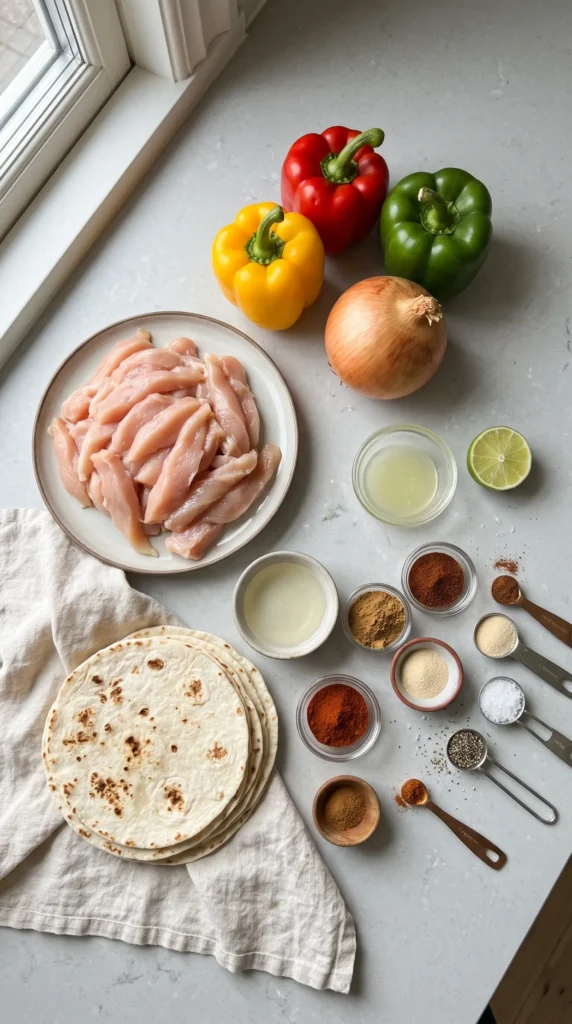
For the chicken and vegetables
- 1.5 lb boneless, skinless chicken breasts, sliced into thin strips
- 3 medium bell peppers, preferably mixed colors, thinly sliced
- 1 large yellow or white onion, thinly sliced
- 2 tablespoons neutral oil, divided (1 tablespoon for the chicken, 1 tablespoon for the vegetables)
For the seasoning
- 2 teaspoons chili powder
- 1½ teaspoons ground cumin
- 1 teaspoon smoked paprika
- 1 teaspoon garlic powder
- 1 teaspoon onion powder
- 1 teaspoon kosher salt, plus more to taste
- ½ teaspoon black pepper
- ¼ teaspoon cayenne or crushed red pepper, optional
To finish and serve
- 1 tablespoon fresh lime juice
- 8 small flour tortillas, warmed, for serving
Ingredient Notes
Peppers. For this recipe, I’d choose a mix of colors. Red and yellow peppers are sweeter, green is more vegetal, and a mix gives you balanced flavor and a better-looking tortilla. Any color works, with only minor changes in flavor.
Seasoning. The blend uses smoked paprika for browning flavor, with chili powder and cumin providing the core fajita taste. Mixing your own means you aren’t depending on a packet. A dry rub applied right before cooking suits a 20-minute recipe better than a marinade, which adds flavor but also adds time.
Lime juice. It goes in at the end so it stays fresh and bright against the smoky spices. Extra lime wedges at the table are a good idea.
Salt and heat. Salt is flexible: start with 1 teaspoon and adjust at the end, since tortillas and toppings add their own sodium. The cayenne or crushed red pepper is optional and entirely up to your heat preference.
Equipment
- 12-inch skillet. The wide surface is what allows a single layer and good browning.
- Instant-read thermometer. It is the reliable way to confirm the chicken is cooked through, and no other method is as dependable for food safety.
Substitutions
| Original | Substitute | What changes |
|---|---|---|
| Boneless, skinless chicken breasts | Boneless, skinless chicken thighs | Richer flavor and more forgiveness against overcooking. Thighs may release more fat and can take slightly longer to brown. Slice thinly and still check for 165°F. |
| Mixed-color bell peppers | Any single color | Minor changes in flavor and color only. Red and yellow are sweeter, green is more vegetal. |
| Flour tortillas | Corn tortillas, lettuce cups, or rice | Changes how you eat it, but the skillet filling stays the same. Corn tortillas are traditional in some fajita settings but can be less flexible. Rice makes the meal more filling. |
If you want a more forgiving cut, I’d reach for thighs. The trade-off is a bit more fat in the pan and a little more patience while they brown.
Variations
Rice and black beans. Serve the fajita mixture over freshly cooked rice with black beans for a more complete, bowl-style meal. The skillet itself stays quick, but the rice adds prep time unless it’s already cooked. Raw rice isn’t part of this 20-minute method, so cook it separately or use rice you already have.
Beef instead of chicken. This makes steak fajitas, which is a different dish rather than a direct swap. Cooking time, how you slice the meat, and doneness preferences all change, so this recipe’s timings don’t carry over.
How to Make Chicken Fajita Skillet
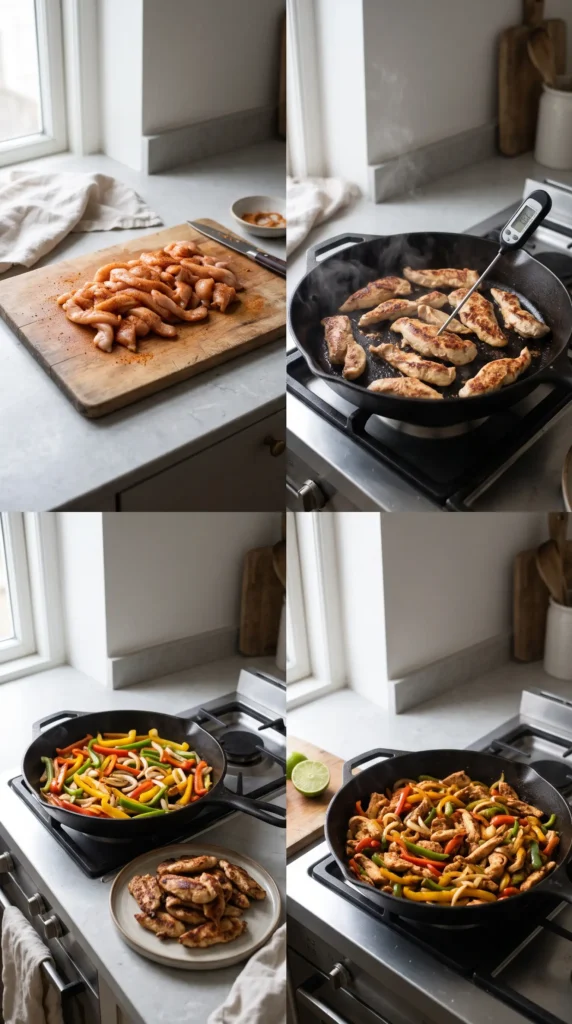
- Prep and season the chicken. Pat the chicken dry and slice it into thin strips. Toss with the chili powder, cumin, smoked paprika, garlic powder, onion powder, kosher salt, black pepper, and the optional cayenne.
- Sear the chicken. Heat 1 tablespoon of the oil in a 12-inch skillet over medium-high heat. Add the chicken in a single layer. It should sizzle right away. Cook, stirring only as needed, until browned and cooked through, about 5 to 6 minutes. Check the thickest piece with a thermometer for 165°F (74°C). Transfer the chicken to a plate.
- Cook the vegetables. Add the remaining 1 tablespoon oil to the skillet. Add the peppers and onion and cook about 4 to 5 minutes, stirring occasionally, until softened at the edges with a few browned spots but still slightly crisp. The pan should look sizzling and mostly dry. If liquid is pooling, the pan is crowded or not hot enough (see Troubleshooting).
- Bring it together. Return the chicken and any juices from the plate to the skillet. Add the lime juice and toss for 1 to 2 minutes, just until heated through. Taste and adjust the salt. The finished dish should taste savory, smoky, and bright, not flat or overly salty.
- Serve. Serve immediately in warm tortillas.
Troubleshooting
Watery, steamed vegetables
- Why it happens: An overcrowded skillet, heat that’s too low, or vegetables releasing moisture before they brown.
- How to prevent it: Use a wide 12-inch skillet, keep the heat high, and cook in batches if you need to.
- How to fix it: Raise the heat and keep cooking briefly until the excess liquid evaporates and the edges start to brown. This is a quick fix, not a lost dinner.
Dry, rubbery chicken
- Why it happens: Overcooking thin strips, leaving them in the pan with the vegetables too long, or cutting pieces too thick.
- How to prevent it: Slice thinly, sear quickly, take the chicken out at 165°F, and return it only for the final toss.
- How to fix it: Don’t keep cooking it. Serve it with salsa, guacamole, sour cream, or a lime-yogurt sauce to add moisture.
Bland or unevenly seasoned result
- Why it happens: Under-salting, or too little seasoning reaching the vegetables.
- How to prevent it: Season the chicken before cooking, finish with lime, and taste before serving.
- How to fix it: Take the pan off the heat and toss in a small amount of lime juice, salt, and cumin.
Storage and Reheating
Make ahead. Slice the vegetables and mix the dry seasoning in advance. For the best texture, cook the chicken and vegetables just before serving.
Refrigerator. Store cooled leftovers in an airtight container for up to 3 days. Keeping the chicken and vegetables separate helps.
Freezer. Freeze cooled leftovers in airtight freezer-safe containers or bags. For best texture, use them within 1 month. Freezing softens the peppers and onions and can dry out the chicken. Thaw overnight in the refrigerator before reheating.
Reheating. Reheat in a skillet over medium heat. Warm the vegetables first, then add the chicken briefly until heated through. The microwave works, but it tends to soften the vegetables.
What to Serve with It
- Warm flour tortillas (or corn tortillas, if you prefer)
- Freshly cooked rice or Mexican-style rice
- Black beans
- Lime wedges
- Salsa and guacamole
- Sour cream, or a lime-yogurt sauce
Nutrition
Estimated per serving (based on 4 servings, without tortillas or toppings): about 310 calories, about 39 g protein, about 11 g carbohydrates, about 10 g fat (about 2 g saturated), about 3 g fiber, about 6 g sugar, and about 590 mg sodium before tortillas, toppings, or any additional salt.
You might Also Like
Grilled California Avocado Chicken Recipe
FAQ
Can I make this chicken fajita skillet ahead for meal prep?
Yes. For this recipe, the best approach is to prep the pieces ahead and cook shortly before eating. Slice the vegetables and mix the seasoning in advance. If you cook the whole dish ahead, store the chicken and vegetables separately when you can, and reheat in a skillet rather than relying on prolonged microwave heating.
Can I freeze the leftovers?
You can, but expect softer vegetables and possibly drier chicken after thawing. Freeze in airtight containers, use within 1 month for best texture, thaw overnight in the refrigerator, and reheat gently in a skillet.
Can I make it with rice?
Yes. Serve the skillet over freshly cooked rice, or stir cooked rice in at the end. Cook the rice separately, since raw rice isn’t part of this 20-minute method.
Is this the same as a chicken fajita skillet casserole?
No. A casserole is baked and usually includes a binding sauce, cheese, rice, or pasta. This is a quick stovetop sauté meant to be served in tortillas.
Final Notes
Three things carry this recipe: a wide pan with the chicken in a single layer, chicken out at 165°F before the vegetables go in, and peppers pulled while they’re still tender-crisp with a few browned spots. Do those and you get the sizzle, the color, and the bite that make a fajita skillet worth the 20 minutes.
20-Minute Chicken Fajita Skillet (One Pan)
Make this chicken fajita skillet in one pan in 20 minutes, with browned chicken, tender-crisp peppers, and a simple 165°F check so it's cooked through.
Ingredients 0/14
Instructions 0/5
Did you love this recipe?
Share it with your friends & family!
Leave a Comment