
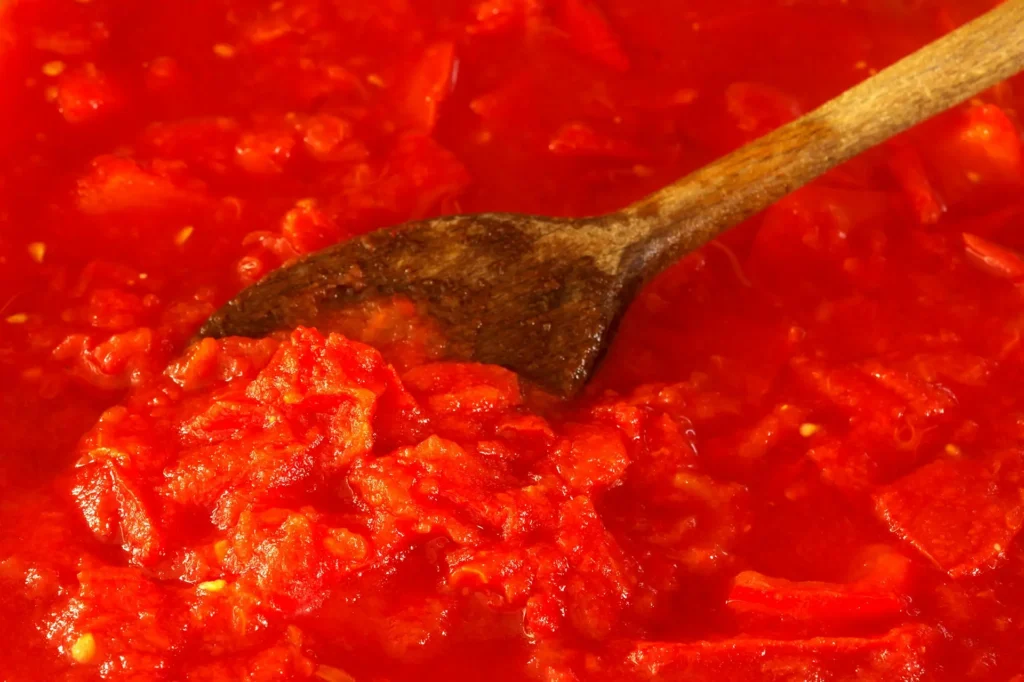
How to Thicken Sauces, Soups and Gravy (5 Easy Ways)
You tilt the pan and the sauce runs straight to the edge like broth. It smells incredible, but it looks more like soup than something that’ll cling to a noodle.
Knowing how to thicken sauces comes down to one decision you make before you add anything. Does the sauce need less water, or does it need more body? Those are two different problems with two different fixes. Pick the wrong one and you get a sauce that’s thick but salty, or glossy but bland.
This guide starts with that decision (it takes one spoonful), then walks through five easy methods for sauce, soup and gravy. After that comes the rescue section, for the nights a sauce turns lumpy, starchy, or suddenly thick enough to stand a spoon in. No special ingredients. Just what’s already in your kitchen.
Table of Contents :
Why Knowing How to Thicken Sauces Actually Matters
A thin sauce slides off the food and pools on the plate, so every bite tastes less seasoned than the pan did. Pasta comes up bare, gravy soaks into the mashed potatoes and disappears, and a stir-fry sits in a puddle (the sad kind lol). Thicken the wrong way and you trade watery for gluey, salty, or faintly floury, which is honestly worse than thin.
How to Thicken Sauces: Choose the Right Method First
The right method depends on how the sauce tastes, not how it looks: a watery-tasting sauce needs reducing, and a sauce that already tastes strong needs a thickener. Here’s the test. Lift out a small spoonful, let it cool for a moment, and taste it.
If it tastes weak or watery, there’s too much water in the pan. Reduce it. Simmering uncovered lets water evaporate, which thickens the sauce and concentrates the flavor in the same move.
If the flavor’s already strong but it still runs off the spoon, it doesn’t need less water. It needs body. Use a measured slurry or another thickener.
If it tastes right but feels thin on the tongue, it wants richness. A knob of cold butter whisked in off the heat, or a scoop of puréed vegetables, rounds it out.
This is the part most guides skip, and it’s the one I’d keep if I had to throw the rest away. A thin sauce isn’t always under-thickened. Keep boiling down a sauce that’s already concentrated and it usually turns salty, sometimes bitter, and you lose a good part of the pan before it ever coats a spoon. (Water evaporates. Salt doesn’t.)
What I do now is taste before I touch anything. It sounds small but it decides everything that follows, because taste tells me whether the problem is water or texture. My eyes can’t tell those two apart.
Why Is My Sauce Too Thin?
A sauce ends up too thin for one of four reasons: too much liquid, not enough cooking time, a weak roux or slurry, or a thickener that never got hot enough to work.
Too much liquid is the common one. Mushrooms, tomatoes and zucchini all release water as they cook, so a sauce that started out fine loosens halfway through. A lid makes it worse. It traps the steam, the steam drips back in, and the sauce never loses any water at all.
The last reason is the one that catches people. Starch only thickens once it’s heated in liquid. The granules swell and absorb water, and that swelling is what turns a loose sauce viscous. Stir a slurry into a sauce that’s barely warm and nothing happens (it just looks cloudy). So you add more, and more, and then the pan heats up and you’ve got paste.
Quick Fix: Need it thick right now? Stir equal parts cornstarch and cold water until smooth, whisk a little into the simmering sauce, and let it bubble briefly until it coats the spoon.
5 Easy Ways to Thicken Sauce, Soup and Gravy
The five easiest ways to thicken sauce, soup and gravy are reducing, a cornstarch slurry, a flour slurry or roux, egg yolks, and puréed vegetables or beans.
- Reduce it: simmer uncovered when the sauce tastes watery.
- Use a cornstarch slurry: for a fast finish at the end of cooking.
- Make a flour slurry or roux: for gravy and creamy sauces that simmer a while.
- Use egg yolks: for rich, velvety cream sauces and soups.
- Purée vegetables or beans: for soups and stews, with no added starch.
1. Reduce It
Take the lid off and hold the sauce at a steady simmer. Pro tip: a wider pan works faster, because more surface means more evaporation. Watch the bubbles. They start small and quick, then turn bigger and slower as the sauce thickens. Stop when a spoon dragged across the bottom leaves a trail that takes a moment to close. Taste as you go, since the salt concentrates right along with everything else.
2. Use a Cornstarch Slurry
Stir equal parts cornstarch and cold liquid in a small bowl until it looks like thin cream with no dry pockets. Cold matters here. Dry cornstarch dropped into hot liquid clumps on contact, and the cold liquid disperses the starch before it ever meets the heat. Whisk the slurry into a simmering sauce a little at a time, then cook it briefly. It’ll go from cloudy to shiny as it thickens, and that’s your cue to stop. Don’t leave it bubbling, because cornstarch-thickened sauces thin out again with prolonged heat.
3. Make a Flour Slurry or Roux
A roux is flour cooked in fat before any liquid goes in. Melt butter (or use pan drippings for gravy), whisk in the flour, and cook until it smells nutty and toasty instead of like raw dough. Then add your liquid gradually, whisking the whole time. Already past that stage? Whisk flour into cold water for a flour slurry and stir it into the simmering pot. Give it longer on the heat than cornstarch, or it’ll taste pasty.
4. Use Egg Yolks Carefully
Egg yolks thicken and enrich at once, but they scramble if they meet hot liquid all at once. So you temper them. Whisk the yolks in a bowl, then pour in a little of the hot sauce in a slow stream, whisking the whole time. That raises their temperature gradually. Stir the warmed yolks back into the pot over LOW heat until the sauce feels silky and clings to the spoon. Don’t let it boil after that.
5. Purée Vegetables or Beans
Blended vegetables or beans thicken a pot with what’s already in it. Scoop out some of the cooked vegetables, potatoes or beans, blend until smooth, and stir it all back in. The soup goes from brothy to creamy-looking with no flour and no flavor you didn’t plan on. It’s my favorite for anything chunky (and handy when there’s a kid at your table who won’t touch anything green). 🙂
Cornstarch Slurry vs. Flour Roux: Which Should You Use?
Use a cornstarch slurry for a quick finish at the end of cooking, and a flour roux for gravy and creamy sauces that simmer for a while.
| Cornstarch slurry | Flour roux | |
|---|---|---|
| Gloss | Often glossy | Matte, velvety |
| Clarity | More translucent | Opaque |
| Timing | Added at the end, thickens fast | Built at the start, needs cooking time |
| Best for | Stir-fry sauces, pan sauces, fruit sauces | Gravy, cheese sauce, chowder |
Flavor’s the other difference. Cornstarch tastes like nothing, so the sauce tastes like itself. A roux adds a toasty, cooked-flour note that makes gravy taste like gravy. I keep both within reach of the stove (they aren’t rivals, they just have different jobs).
How to Fix a Sauce That Still Won’t Thicken
A sauce that still won’t thicken almost always needs more heat or more time before it needs more thickener. Bring it to a proper simmer and give the starch a moment to swell. Still loose? Then there’s too much liquid for the amount of thickener, so add more slurry gradually (never the whole bowl at once).
If It’s Lumpy
Lumps are pockets of dry starch sealed inside a cooked shell, and whisking harder won’t open them. Pour the sauce through a fine-mesh sieve, or blend it smooth with an immersion blender.
If It Tastes Starchy
A starchy, pasty taste means the flour hasn’t cooked long enough. Let’s be honest, this one only needs patience. Keep the sauce at a gentle simmer, stirring so it doesn’t catch, until that raw edge fades.
If It Becomes Too Thick
Whisk in warm stock, water or milk, a splash at a time, until it loosens. Starch-thickened sauces keep tightening as they cool, so I always pull mine off the heat a touch looser than I want it on the plate.
How to Store and Reheat Thickened Sauces
Refrigerate leftover sauce, soup or gravy within 2 hours (within 1 hour if the room is above 90°F) and use it within 3 to 4 days. Keep the fridge at 40°F or below. Gravy and broth freeze well for 2 to 3 months for best quality.
It’ll look thicker, even jellied, straight from the fridge (totally normal, since starch sets as it cools). Whisk in a splash of liquid as it warms. Reheat leftovers to 165°F, and bring sauces, soups and gravies to a boil.
Frequently Asked Questions
How do you thicken a sauce with cornstarch?
Mix equal parts cornstarch and cold water into a smooth slurry, then whisk it into a simmering sauce. Add it gradually and cook it briefly. It’s ready when the sauce coats the back of a spoon.
Can you use flour instead of cornstarch to thicken sauce?
Yes, flour thickens sauce well, it just behaves differently. It needs longer cooking to lose its raw taste, and it gives a less glossy, more opaque finish. It’s at its best cooked in fat as a roux, or whisked into cold water as a flour slurry.
Does simmering sauce longer always make it thicker?
It gets thicker, but that isn’t always the right fix. Simmering thickens by evaporating water, and that concentrates salt and flavor too. A sauce that already tastes strong gets saltier before it gets thick, so reach for a starch instead.
How much cornstarch do you need to thicken 2 cups of sauce?
Start with a small slurry of equal parts cornstarch and cold water, and add it a spoonful at a time. The right amount depends on the base liquid and how thick you want it, so no single measurement fits every sauce. Let each addition simmer and thicken before you decide on more.
Why is my sauce still thin after adding cornstarch?
The sauce most likely isn’t hot enough yet. Starch only thickens once it’s heated in liquid, so bring the sauce to a simmer and give it a moment. If it’s still loose, there’s too much liquid for the amount of slurry. Add more gradually instead of all at once.
You Might Also Like :
Common Ingredient Substitutions for Home Cooks
How to Thaw Chicken Safely (3 Fast Methods)
How to Cook Rice on the Stove: Fluffy, Not Gummy
Once you start tasting before you thicken, a thin sauce stops feeling like an emergency and starts feeling like a quick question with a clear answer. Dinner gets calmer. Which sauce gives you the most trouble, gravy or a weeknight pan sauce? Tell me in the comments and I’ll help you sort it out.
Did you love this recipe?
Share it with your friends & family!


Leave a Comment