
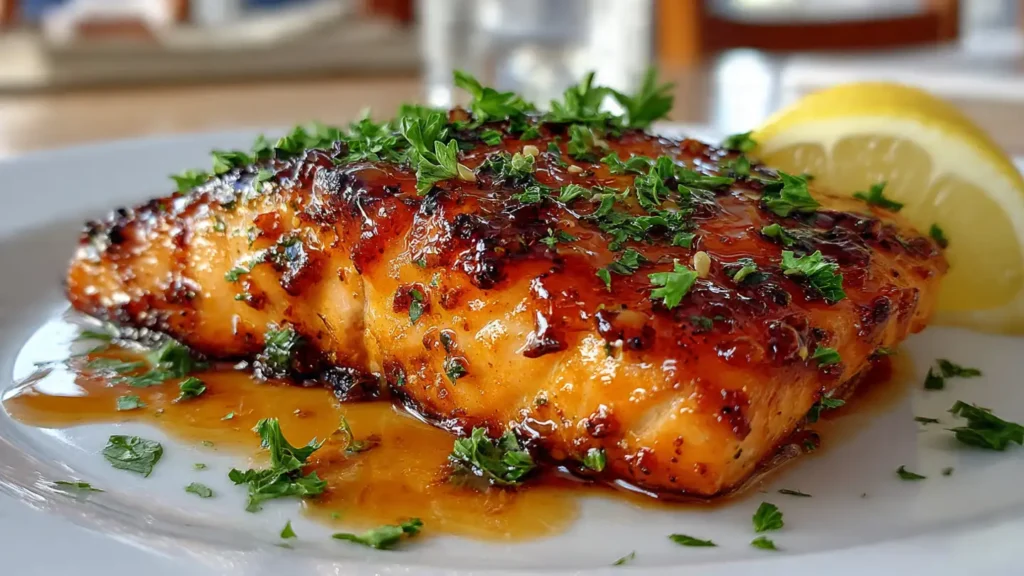
Easy One-Pan Honey Garlic Salmon That Actually Tastes Like Something
I have made this one-pan honey garlic salmon about 25 times. I have also gotten it wrong about 8 of those times. And the frustrating part is that I kept making the same two mistakes without understanding they were even mistakes. Cold salmon straight from the fridge. Glaze poured into a still-hot pan at the wrong moment. Both of those seem minor until you’ve watched a perfectly good honey sauce turn dark and bitter in about 45 seconds and had no idea why.
Now I know exactly what went wrong. And this is one of my favorite weeknight dinners.
Why You’ll Love This One-Pan Honey Garlic Salmon
- Ready in 25 Minutes: Fridge to table, no marinade wait required.
- One Pan, Fewer Dishes: Everything happens in a single oven-safe skillet, start to finish. (My husband has noticed. I’m not going to pretend otherwise.)
- The Glaze Actually Sticks: This recipe explains why the sauce burns and how to prevent it, which most recipes quietly skip over.
- Picky-Kid Approved: My older one won’t touch anything green and cleans every bite of this salmon. I stopped asking follow-up questions.
- Real Pantry Ingredients: The only thing you probably need to pick up is the salmon itself.
Prep Time: 10 min
Cook Time: 15 min
Total Time: 25 min
Servings: 4
Difficulty: Easy
Cost: Budget-friendly
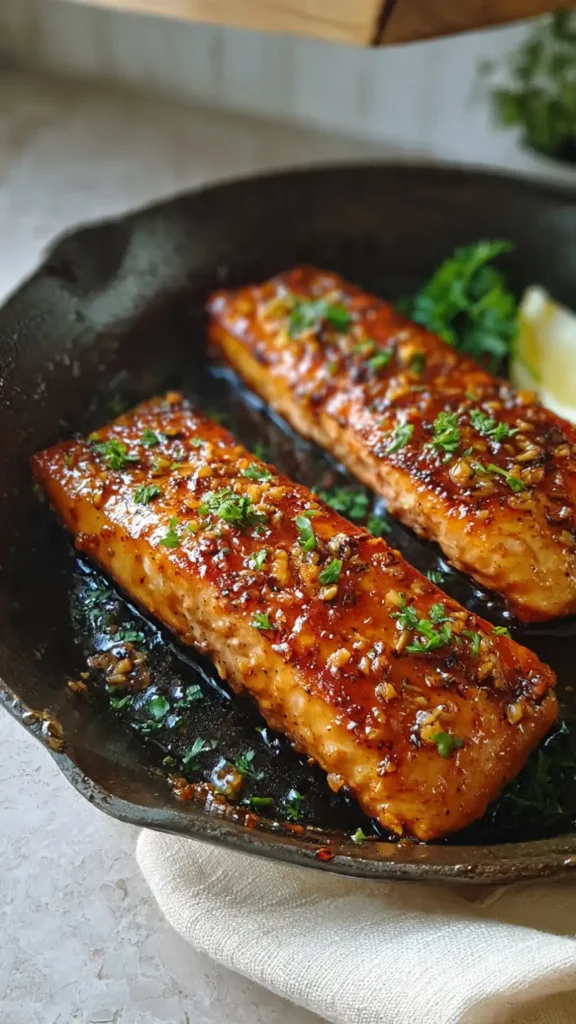
Recipe Background
Salmon used to feel like more of a project than it needed to be. Not because it’s complicated, but because I’d watched enough things go sideways to build up some hesitation around it.
What helped was pulling apart every honey garlic salmon recipe I could find and seeing where they disagreed (and honestly, they disagreed more than I expected). How much honey to use is a real split: some minimalist recipes use 1.5 tablespoons, some baked versions call for a full quarter cup. Whether soy sauce belongs in the glaze is another one. Whether to use a skillet, an oven, or both is a third. I landed on the stovetop-to-oven method because you get the sear crust from the pan AND the even interior doneness from the oven heat, and it is genuinely not harder than doing either step alone.
The cold-fish thing was the part I didn’t see coming. I used to cook salmon straight from the fridge and never understood why the thick center was still raw while the edges were already overdone. Even 10 minutes on the counter before cooking makes a real, measurable difference.
What I Do Differently (and Why It Works)
I pull the salmon out early and pat it BONE dry.
Ten minutes at room temperature before cooking is not optional for me anymore. Cold fish hits a hot pan unevenly: the surface overcooks while the thick center is still catching up. Resting it briefly flattens that curve. And the drying step matters more than I expected. I thought I was being thorough with the paper towels, but the fillets were still wetter than they looked (even pressing firmly once wasn’t quite enough). Really dry salmon sears instead of steaming, and that shows up in the finished texture.
I turn the burner off before adding the glaze.
This is the fix that changed everything. My first two attempts went the same way: glaze into the pan, honey darkened fast, bitter sauce, ruined finish. What actually works is flipping the salmon skin-side down, then cutting the heat immediately. The residual heat in cast iron does all the work. The sound to listen for is a steady, gentle sizzle, not aggressive spitting and crackling. If the glaze is going loud and dark, the pan held too much heat. Pull it off the burner for 30 seconds.
I use 3 tablespoons of honey, not a quarter cup.
Some recipes call for ¼ cup. That version produces a glaze, but it tips the flavor balance toward sweet in a way that competes with the salmon instead of complementing it. At 3 tablespoons, you get the caramelization and the shine without the candy quality. It’s a small change and it matters.
Variations and Substitutions
- Maple syrup instead of honey: Works well. The glaze is slightly thinner and the flavor is more mellow and earthy. A good call if you want to pull back the sweetness.
- Tamari instead of soy sauce: A direct gluten-free swap with nearly the same flavor profile. Coconut aminos also works for a soy-free version (it’s a little sweeter and less salty, so taste the glaze before pouring).
- Different protein: Cod and haddock both take this glaze well. Cook time goes down for thinner fillets, so start checking earlier. Shrimp cooks in about 2 to 3 minutes per side, so watch it closely.
- No butter: Replace it with a bit more olive oil. You lose some richness and caramelization, but it works for a lighter result.
- Skinless fillets: Totally fine. Handle them more gently when flipping since they’re more fragile without the skin to hold the shape.
Equipment You’ll Need
- Oven-safe skillet: Cast iron is ideal here. It retains heat evenly, handles the high-heat sear, and goes straight from stovetop to oven without needing a second pan. A heavy stainless skillet works too.
- Fish spatula: Thin and flexible, it slides cleanly under a salmon fillet without tearing it. A regular spatula works in a pinch, but a fish spatula is one of the better inexpensive kitchen purchases I’ve made.
- Instant-read thermometer: The most reliable doneness check, full stop. No cutting into fillets, no guessing.
- Paper towels: More than you think you’ll need.
One size note on the skillet: a 12-inch pan fits four 6-oz fillets without crowding. Too large and the glaze spreads thin and scorches; too small and the fillets steam each other instead of searing.
Ingredients For One-Pan Honey Garlic Salmon
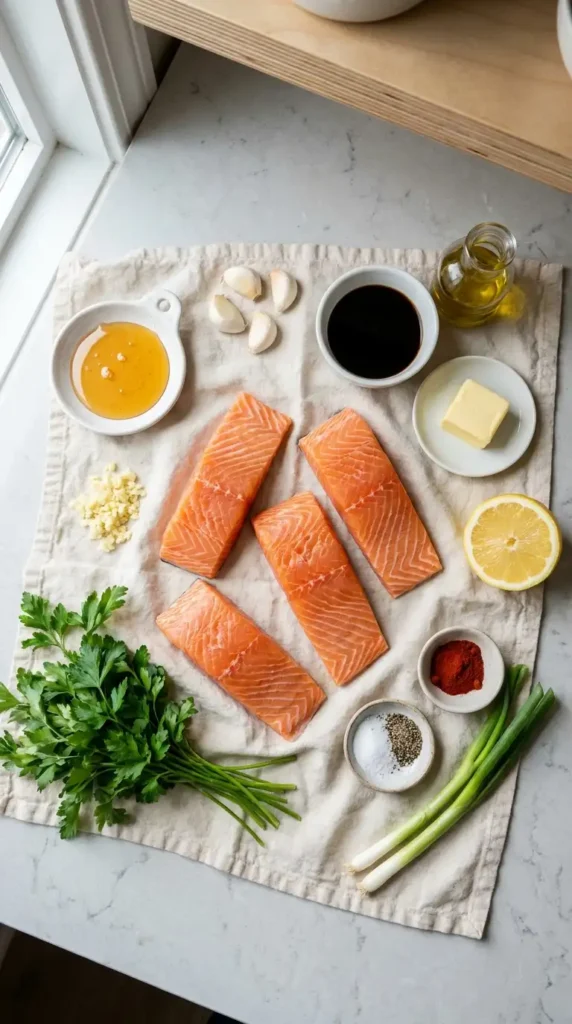
- 4 salmon fillets, about 6 oz each (skin-on preferred; skinless works)
- 3 tablespoons honey
- 4 cloves garlic, minced
- 1 tablespoon low-sodium soy sauce
- 1 tablespoon butter
- 1 tablespoon olive oil
- 1 tablespoon fresh lemon juice
- ½ teaspoon smoked paprika
- Pinch of cayenne pepper (optional)
- Salt and black pepper to taste
- 2 tablespoons hot water
- Fresh parsley or green onion for garnish
For the soy sauce, I reach for Kikkoman low-sodium every time. The regular version over-salts this glaze and the balance tips wrong fast. The 10-oz bottle is around $2.50 at Walmart. (Skip ordering it online — the same bottle somehow costs $8 once you add shipping, which makes no sense for a pantry staple.)
Instructions For One-Pan Honey Garlic Salmon
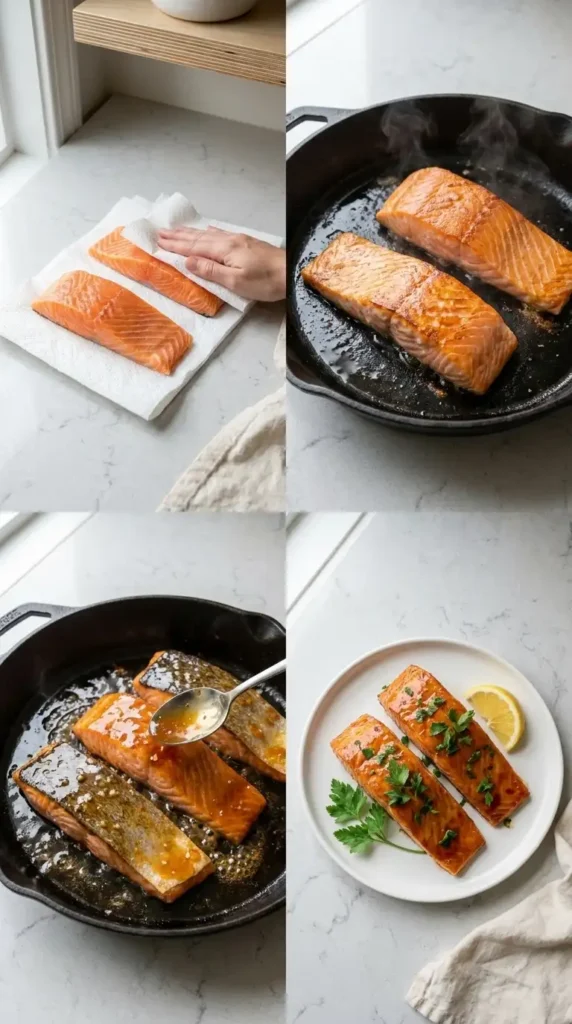
Step 1: Rest and Dry the Salmon
Pull the fillets from the fridge about 10 minutes before cooking. While they’re sitting, pat both sides firmly with paper towels. Press down and actually absorb the moisture — they’re wetter than they look, and you want the surface as dry as you can get it. Dry fish sears; wet fish steams.
Step 2: Make the Glaze
Whisk together the honey, soy sauce, fresh lemon juice, minced garlic, smoked paprika, cayenne if you’re using it, and the 2 tablespoons of hot water. The hot water helps keep the glaze fluid so it doesn’t seize the moment it hits the pan. Set the bowl right next to the stove. You’ll need to reach for it quickly.
Step 3: Heat the Pan
Place your cast iron skillet over medium-high heat and let it get fully hot before adding anything. Add the olive oil and butter together. When the butter melts and starts to foam, the pan is ready. Season the salmon on both sides with salt and black pepper.
Step 4: Sear Flesh-Side Down
Lay the fillets flesh-side down in the pan. Do not move them. Let them cook undisturbed for 3 to 4 minutes until they release naturally from the pan surface. (If you try to lift a fillet and it resists, it needs another 30 seconds. Don’t force it or it tears. The fish will let you know when it’s ready.)
Step 5: Flip and Turn Off the Heat
Flip each fillet to skin-side down. Turn off the burner immediately. Pour the glaze over the fillets right away and spoon it over the tops repeatedly for about 1 minute. The residual heat from the cast iron does the work. Listen for a gentle, steady sizzle. If it’s spitting and crackling loudly, the pan held too much heat — slide it off the burner for 30 seconds before transferring to the oven.
Step 6: Finish in the Oven
Transfer the skillet to a 425°F oven for 4 to 6 more minutes. The salmon is done when it reaches an internal temperature of 145°F at the thickest point (per USDA guidelines for seafood) and flakes cleanly when pressed. The center should look fully opaque, not translucent.
Step 7: Rest and Serve
Let the fillets rest in the pan for 2 to 3 minutes off the heat. Spoon the remaining pan glaze over the tops. Finish with fresh parsley or sliced green onion and a squeeze of fresh lemon.
How to Store, Reheat, and Make Ahead
- Fridge: Store leftovers in an airtight container for up to 3 days. (Day-two salmon is honestly quite good as long as you reheat it gently.)
- Freezer: Cooked salmon freezes for up to 2 months. Wrap the fillets individually before putting them in a freezer bag, otherwise they freeze together and you end up defrosting more than you wanted.
- Reheat: Low heat in a covered skillet with a small splash of water, about 3 to 4 minutes. The microwave works but runs the risk of rubbery texture; use medium power and check it early.
- Make Ahead: The glaze mixes up in 2 minutes and keeps in the fridge for up to 24 hours. The salmon is best cooked fresh.
After you try this recipe, Also try my Chicken Pot Pie with Biscuits too!
Personal Tips
The sensory cue I rely on most is the sound of the glaze going in. Steady, gentle bubbling means the temperature is right. Loud, aggressive spitting means the cast iron is too hot even after cutting the burner, and the glaze will over-darken. That’s when you pull the pan completely off the heat for 30 seconds before the oven.
Mince the garlic finely rather than using a press. Pressed garlic releases more liquid, and the extra moisture at high heat can push the glaze toward bitter. A fine mince gives you the same flavor without the issue. (Lol, I used a garlic press for two years before I figured this out.)
If your fillets are very thick (over an inch at the center), give them an extra minute in the oven before checking the temperature.
What to Serve With It
Steamed jasmine rice is the natural pairing here because it soaks up the extra pan glaze really well. Roasted baby potatoes do the same thing. For something lighter alongside, a quick cucumber salad with fresh dill and rice vinegar keeps things fresh without much extra work. If you want to keep it to one oven session, roasted broccoli or green beans tossed in olive oil can go in at the same time the salmon finishes, at the same temperature.
You May Also Like To Try :
What Other Recipes Get Wrong
Almost every honey garlic salmon recipe I’ve seen acknowledges that the glaze can burn, but almost none of them explain why. The actual causes are specific: the pan is too large so the sauce spreads thin and scorches, the heat is still on when the glaze goes in, or the honey hits the pan before the burner is off. Knowing the cause is what actually fixes it. Turning off the heat before adding the glaze is the single most useful adjustment you can make to most published versions of this recipe, and it’s the one step that almost nobody spells out.
Nutrition Information
Per serving (based on 4 servings):
Calories: 395 kcal
Carbohydrates: 18g
Protein: 37g
Fat: 20g
Saturated Fat: 4g
Sodium: 350mg
Fiber: 0g
Sugar: 15g
Calculated based on 4 servings. Values are estimates and will vary based on the exact size of your fillets and brands used.
Frequently Asked Questions
Can I use skinless salmon fillets?
Yes. They work fine with this recipe, just handle them more carefully when flipping since they’re more fragile without the skin holding the shape together.
Why did my glaze burn?
Usually one of three specific causes: the pan was too large so the sauce spread thin and scorched, the heat was still on when the glaze went in, or the cast iron hadn’t released enough heat yet. Turning the burner off before adding the glaze is the fix.
Can I make this oven-only, no stovetop step?
Yes! Brush the glaze on the fillets, bake at 400°F for 12 to 15 minutes, and add another brush of glaze halfway through. You won’t get the sear crust, but it’s very forgiving and still genuinely good.
Can I marinate the salmon ahead of time?
Yes, briefly. A 15 to 30 minute marinate adds flavor and is totally fine. Past 2 hours, the soy sauce starts to break down the protein and the texture softens in a way that isn’t ideal. Overnight is too long for this glaze.
What can I substitute for soy sauce?
Tamari is the closest swap and works well for gluten-free cooking, with nearly the same flavor profile. Coconut aminos keeps it soy-free; it’s a little sweeter, so taste the glaze before pouring and adjust if needed.
How do I know the salmon is done without a thermometer?
Press the thickest part lightly with a fork or your finger. If it flakes into clean segments and looks fully opaque with no translucent center, it’s done. An instant-read thermometer reading 145°F is still the most reliable method, and they’re inexpensive.
If you make this and have a quick second to scroll down and click the stars to rate it, I would really appreciate it! It helps my little website so much, so thank you.
This one-pan honey garlic salmon is done in 25 minutes with a caramelized glaze that actually works. Real technique tips including the fix for why the glaze burns. Easy One-Pan Honey Garlic Salmon That Actually Tastes Like Something
Ingredients
0/12
Instructions
0/7
Did you love this recipe?
Share it with your friends & family!


Leave a Comment