
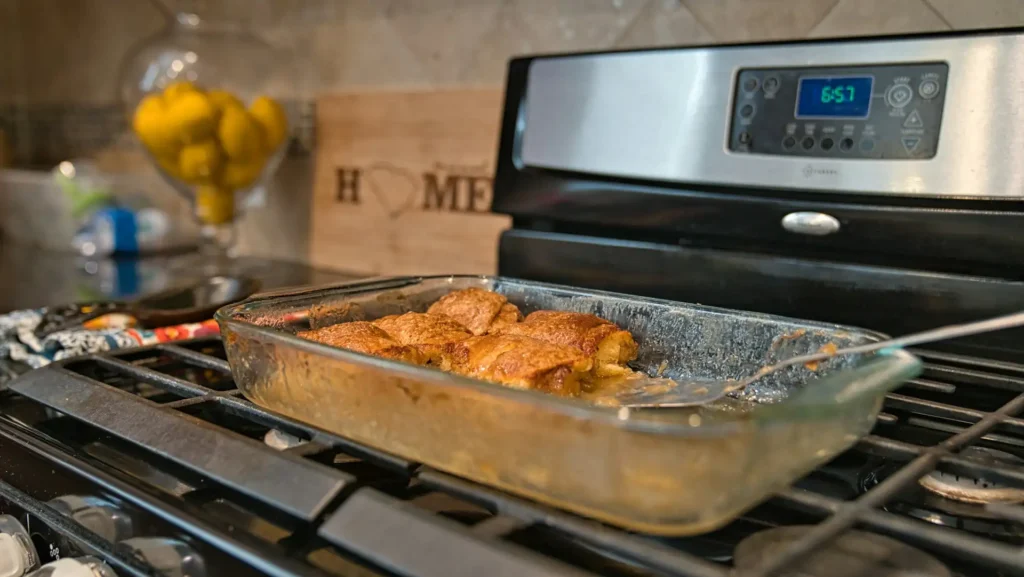
How to Reheat Leftovers So They Taste Freshly Made
The microwave beeps and you already know. Sunday’s chicken comes out rubbery, the rice is hard in spots and gummy in others, and the kitchen smells like reheated food instead of dinner. Learning how to reheat leftovers so they taste freshly made changed that for me, and it came down to one thing: slowing the heat down.
Once I understood that, I stopped guessing my way through the microwave and started actually fixing the problem instead of hiding it under another splash of sauce. Here’s what’s actually happening: fast heat doesn’t just warm your food, it pulls moisture out of it before that moisture has a chance to redistribute. Slow it down and cover it, and you get something a lot closer to what came out of the oven the first time. That’s the whole shift, and it works whether you’re dealing with chicken, rice, pizza, or last night’s pasta.
Table of Contents
The Real Reason Leftovers Turn Dry or Rubbery
Leftovers turn dry or rubbery because fast, high-intensity heat, like a microwave on full power or a hot dry pan, causes moisture at the surface of the food to flash into steam and escape before it can travel back into the fibers, while low, gradual heat gives that moisture time to migrate through the food instead of leaving it entirely.
Picture a piece of chicken breast. The surface hits high heat immediately (microwaves are especially aggressive at the edges), the water near the surface turns to vapor almost instantly, and that vapor just leaves through the surface instead of soaking back into the meat. Dense, tightly packed foods like meat suffer for this the most, while looser, more porous foods like rice or bread lose moisture just as fast but show it differently, going hard instead of stringy.
The USDA’s own guidance on reheating leftovers backs up the practical fix: covering food while it reheats traps that escaping steam and pushes it back down into the food instead of losing it to the air. It’s a small step, but it’s doing real work.
What actually matters is heat intensity, not heat duration. A slower reheat that takes five extra minutes will almost always beat a hot blast that finishes fast but leaves the outside tough before the inside is even warm. If you watch the edges curl or the surface look dry and slightly shriveled before the center feels warm, that’s your sign the surface is losing moisture faster than the center is heating up. Lower the heat and cover it.
Why Does Reheating in the Microwave Dry Out My Food?
Reheating in the microwave dries out food because it heats unevenly and fast, hitting the outer layer with intense energy while the center lags behind, which means the surface is often overcooked and moisture-stripped by the time the middle finally catches up.
Microwaves work by exciting water molecules directly, and the outer layer of food absorbs most of that energy first (this is also why microwaves have hot spots and cold spots in the same dish). By the time the center reaches temperature, the edges have already been hit with far more energy than they needed, and a lot of their moisture has already escaped as steam.
Stirring food halfway through microwaving helps eliminate cold spots, since it moves the parts that were heating fastest away from the hottest zones and gives the whole dish a more even pass. I do this with almost anything that isn’t a single solid piece, soup, rice, pasta, casseroles, all of it.
Quick Fix: Lay a damp paper towel over the food before microwaving in short 30-second bursts, stirring or rotating between each one. The damp towel creates steam that gets trapped against the food instead of escaping into the microwave.
Best Reheating Method for Every Type of Leftover
The best reheating method depends on density and moisture content, not on which appliance happens to be closest, so match the method to the food instead of defaulting to the microwave for everything. No matter what you’re reheating, the same four moves apply:
- Cover it, so the steam has somewhere to go besides straight out into the air.
- Add a small splash of liquid if the food looks dry going in (broth, water, or sauce, depending on the dish).
- Use lower heat than you’d think, and give it a little more time.
- Check the center, not just the edges, before deciding it’s done.
Meat & Poultry: Cover with foil and reheat in the oven around 250–300°F. It’s slower than the microwave, but the low, even heat is exactly what dense proteins need to warm through without seizing up. Check with a food thermometer, poultry needs to reach a safe minimum temperature of 165°F.
Rice & Grains: Add a splash of water, cover, and microwave in short bursts, stirring between each one, or steam it on the stovetop in a covered pan.
Pasta & Sauces: Reheat the sauce and noodles together in a covered pan, with a splash of pasta water if you saved any. It brings back moisture the noodles lost sitting in the fridge.
Pizza & Fried Foods: Skillet or oven, not microwave. The dry, direct heat re-crisps the crust instead of steaming it soft.
Vegetables: A quick pass is all they need. They’re already cooked once, so a short reheat keeps them from going mushy.
What I do now is let reheated chicken sit for a minute before I cut into it or serve it. It sounds small, but letting the juices redistribute after reheating works the same way it does after roasting, the center keeps more moisture instead of losing it all onto the cutting board the second you slice.
Reheating Rice and Pasta Safely: What the Experts Actually Say
Rice carries a food safety risk that pasta doesn’t, and it comes down to a specific bacteria, not general leftover spoilage.
Rice can contain Bacillus cereus spores that survive the original cooking and, if the rice sits at room temperature too long afterward, produce a heat-stable toxin that reheating won’t destroy (this is different from most leftover bacteria, which regular reheating handles just fine). Pasta doesn’t carry this particular risk the same way, so the danger with pasta is more about general bacterial growth from sitting out too long, the standard leftover rules apply.
That difference is why rice needs faster cooling and tighter timing than most other leftovers. Get it into the fridge quickly, and don’t leave a rice cooker on “warm” for hours as your storage plan (I’ve done this, lol, it is NOT the move).
For pasta with sauce, reheat the sauce and noodles together in a covered pan with that splash of starchy pasta water if you saved any, it brings the moisture back. For dry pasta salads, a little olive oil does the same job.
How Long Are Leftovers Safe to Reheat, and How Many Times?
Leftovers are safe in the fridge for 3 to 4 days, and they can technically be reheated more than once as long as they hit 165°F every time and aren’t left out repeatedly.
The clock starts the moment the food is cooked, not the moment you put it away, so get perishable food into the fridge within two hours of cooking or serving (one hour if your kitchen is above 90°F). Storing leftovers in small, shallow containers helps them cool faster once they’re in there, which matters more than people think.
Reheating more than once isn’t the problem in itself, it’s how the food is handled between reheats. Every time food sits in the danger zone between 40°F and 140°F, it’s another chance for bacteria to build back up, so the safest approach is to only reheat the portion you’re actually going to eat instead of cycling the whole container through the microwave over and over.
Frozen leftovers stay safe indefinitely from a pure safety standpoint, but quality drops off, so I try to use mine within three to four months for the best texture and flavor.
Frequently Asked Questions
How do you reheat leftovers so they don’t dry out?
The short answer is low heat and moisture. Cover your food, reheat it slower than feels necessary, and add a splash of liquid if it looks dry going in. That combination traps steam instead of losing it, which is the actual mechanism behind almost every “leftovers taste better” trick you’ve heard.
Can you reheat leftovers more than once?
Yes, as long as each reheat reaches 165°F and the food isn’t left sitting out in between. That said, quality drops with each round and the safety margin gets thinner every time it cools and reheats, so it’s smarter to only reheat what you’re going to eat right then.
Why does reheating leftovers in the microwave make them rubbery?
It’s not that microwaves are bad at reheating, it’s that they heat fast and unevenly, hitting the outside hard while the center lags behind. By the time the middle catches up, the outer layer has already lost moisture it can’t get back. Covering the food and using shorter bursts at lower power fixes most of this.
How long can you keep leftovers in the fridge before reheating?
Leftovers are good in the fridge for 3 to 4 days. Get them refrigerated within two hours of cooking, in shallow containers so they cool quickly, and that window holds.
What happens if you eat reheated rice that’s been left out too long?
Rice that sits out too long can develop a toxin from Bacillus cereus bacteria that reheating does not destroy, since the toxin, not just the bacteria, is what’s heat-stable. That’s why rice specifically needs faster cooling than most other leftovers, the standard rules that work for meat or pasta don’t cover this particular risk.
You Can Check Also :
How to Cook Chicken Perfectly Every Time (Juicy, Tender & Never Dry)
10 Common Cooking Mistakes Beginners Make (And How to Fix Them Fast)
How to Read a Recipe Properly Before Cooking (Avoid Common Mistakes)
Once you stop fighting the microwave and start matching heat to the food in front of you, leftovers stop feeling like a downgrade. I still won’t pretend day-three rice is the same as fresh, but it stops tasting like a compromise 🙂 What’s the leftover you’ve had the hardest time getting right, rice, chicken, something else? Tell me in the comments and I’ll help you troubleshoot it.
Did you love this recipe?
Share it with your friends & family!
Leave a Comment