
The Complete Guide to Resting Meat and Carryover Cooking
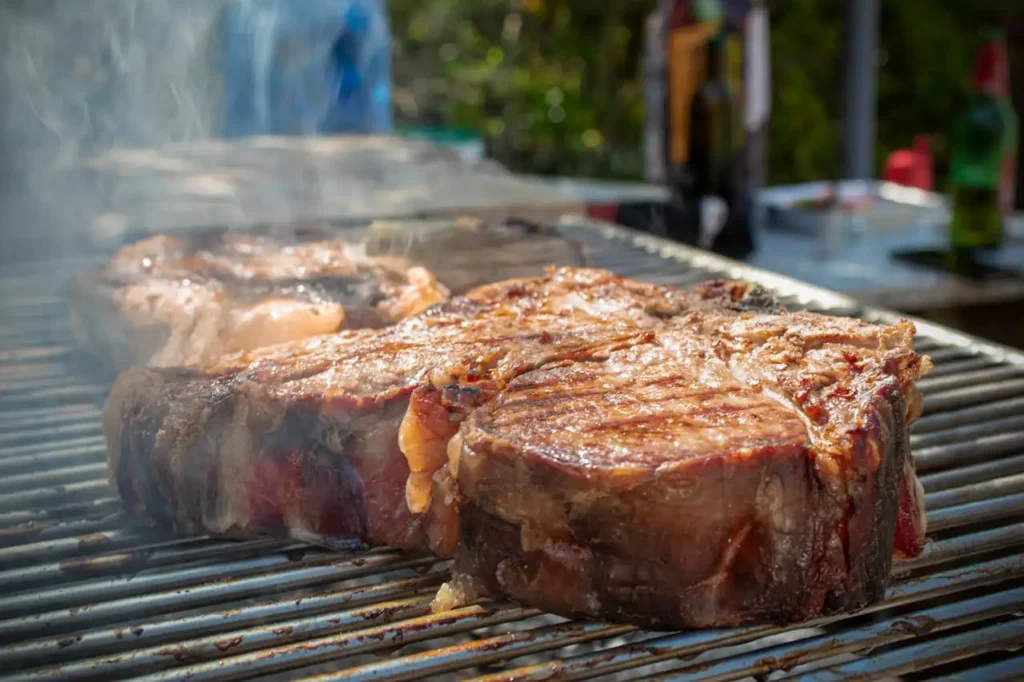
I pulled a gorgeous ribeye off the grill once, sliced straight into it, and watched a small river of red juice pool across my cutting board. The steak was dry and chewy before I even took a bite. I’d cooked it perfectly to medium-rare by temperature, and I still wrecked it, because I skipped resting meat and carryover cooking was something I hadn’t thought about yet.
That was the night I actually looked into what resting does, and why cutting too early isn’t just impatience, it’s physics.
Table of Contents
Why Resting Meat and Carryover Cooking Are the Same Conversation
Most guides treat these as two separate topics. They’re not. They’re two parts of the same process, and if you handle one without understanding the other, you’ll keep pulling meat off the heat at the wrong temperature.
Here’s what’s happening: when meat sits over high heat, the muscle fibers tighten and squeeze moisture toward the center of the cut. The outer layers cook faster than the interior, so the temperature gradient inside the meat is uneven, not a single reading. When you pull it off the heat, that process doesn’t stop immediately. The residual heat stored in the outer layers keeps moving inward for several minutes. That’s carryover cooking.
For a thick steak, that carryover can raise the internal temperature by 3 to 8 degrees Celsius (roughly 5 to 15°F) depending on how hot your cooking surface was and how thick the cut is. A thin chicken breast on a screaming-hot pan might only carry over 2 to 3 degrees. A thick roast pulled from a 220°C oven can easily carry over 8 to 10 degrees.
This means if you’re targeting medium (around 63°C / 145°F), you should be pulling your steak off the heat at about 57 to 58°C (134 to 136°F). Not at 63°C. By the time you plate it, it’ll be exactly where you want it.
USDA safe internal cooking temperatures for beef, poultry, and pork
Quick Fix: Pull your meat off the heat 5 to 8 degrees Celsius (8 to 15°F) before your target temperature, then let it rest. The carryover will finish the job.
How Long Should Meat Rest After Cooking
This is the question I get the most, and the answer is: longer than you think, but not as long as some people claim.
The purpose of resting is to let those tightened muscle fibers relax and reabsorb the moisture that got pushed to the center during cooking. If you cut too soon, that moisture has nowhere to go except your cutting board. If you wait, the fibers loosen, the liquid redistributes, and it stays in the meat when you slice.
Here’s a practical breakdown by cut size:
- Thin steaks under 2.5cm (1 inch): rest 5 minutes, loosely tented with foil
- Thick steaks and pork chops (2.5 to 4cm): rest 8 to 10 minutes, loosely tented
- Whole chicken or duck: rest 15 to 20 minutes, uncovered on a rack
- Large roasts and whole legs of lamb: rest 20 to 30 minutes, loosely covered
The numbered steps above aren’t arbitrary. They’re based on how long it takes for fiber tension to release relative to mass and residual heat. A thick brisket holds heat longer and needs more time to redistribute. A thin pork cutlet cools fast and 5 minutes is enough.
Resting Meat Covered or Uncovered: The Answer Depends on the Crust
This one comes up constantly and the real answer is more nuanced than most posts admit.
If you’ve worked hard to get a proper crust, covering with foil, even loosely, creates steam. Steam softens crusts. I learned this the expensive way after making a slow-roasted pork shoulder with a beautiful crackling, then tenting it with foil “to keep it warm” and ending up with limp, chewy skin by the time it hit the table.
The rule I use now:
- Cuts where the crust matters (pork crackling, seared steak, roast chicken skin): rest uncovered, or loosely tent only if the room is very cold
- Cuts where moisture retention matters more than crust (braises, slow roasts, pulled pork): tent loosely with foil
The tent itself doesn’t warm the meat. It just slows heat loss slightly. The difference in temperature between a tented and untented steak after 8 minutes is usually only 1 to 2 degrees. It’s not doing as much as people think.
How to Rest Meat Without It Getting Cold
Here’s the insight that almost never shows up in basic guides, and it genuinely changed how I cook for dinner parties.
The problem isn’t that resting makes meat cold. The problem is that most home cooks rest meat on a cold plate, next to an open window, or under an air conditioning vent. The meat gets cold because of the environment, not because resting itself causes heat loss.
Three things I do now that actually work:
First, I rest meat on a warm plate. I run hot tap water over my serving plate for 30 seconds and dry it before putting the meat on it. A cold ceramic plate will drop your steak’s surface temperature noticeably in the first two minutes.
Second, I use residual oven warmth. I turn my oven off, crack the door for 60 seconds, then close it. I put the resting meat on a rack inside the off oven. The temperature in there is warm enough to prevent heat loss without continuing to cook the meat.
Third, I account for it in timing. If guests are sitting down in 15 minutes, I pull the roast 5 minutes early specifically so the rest period overlaps with the time it would have been sitting on the counter anyway.
What I Do Now: I stopped thinking of resting as time the meat is “cooling down” and started thinking of it as the final stage of cooking. The meat isn’t done when I pull it off the heat. It’s done after the rest.
The Letting Meat Rest Before Cooking Myth (and One Thing That’s Actually True)
You’ve probably read that you should let meat come to room temperature before cooking. It sounds logical, there’s a food science reason behind it, but the real-world effect is much smaller than most people believe.
The idea is that cold meat takes longer to cook through, which means more time on the heat, which means more overcooked outer layers by the time the center reaches temperature. Reasonable in theory. In practice, a 2.5cm steak left on the counter for 30 minutes typically warms from refrigerator temperature (about 4°C) to roughly 10 to 13°C. That’s still very cold. It makes a difference of maybe 1 to 2 minutes of total cooking time. On a thin cut, that’s nearly imperceptible.
Where it actually matters: very thick cuts, especially roasts over 2kg. A large leg of lamb or a whole beef tenderloin genuinely benefits from 45 to 60 minutes at room temperature before it goes in the oven, because the temperature differential between exterior and interior is large enough to create meaningful overcooking on the outside.
The part that IS worth doing: pat the meat dry with paper towels before cooking, regardless of whether you’ve tempered it. Surface moisture turns to steam on contact with a hot pan, and steam prevents browning. The Maillard reaction, the chemical process that creates that dark, flavorful crust, happens above about 140°C (285°F). Water keeps the surface below 100°C until it evaporates. Dry the surface, get the crust. This matters infinitely more than room temperature.
When Carryover Goes Wrong: The Overcooked Roast Problem
Let me tell you about Christmas dinner, two years ago. I had a 1.8kg beef sirloin roast, a good oven thermometer, and a plan. I pulled it at exactly 60°C because I wanted medium. I covered it tightly, because I’d read somewhere that you should keep it warm. When we carved it 25 minutes later, it was 71°C and gray all the way through. Well done. Every single slice.
Two problems happened at once. First, I pulled at target temperature instead of pulling early. Second, I covered it tightly, which trapped heat and let the carryover keep going far longer than it should have.
The oven had been at 220°C, the outer layers of the roast were far hotter than 60°C, and they had a lot of heat left to give. That carryover ran to about 11 degrees above where I pulled it.
If I could go back: I would have pulled at 54°C (about 130°F), rested uncovered on a rack for 20 minutes, and it would have landed at a perfect rosy medium. The lesson wasn’t just “pull earlier.” It was that the hotter your cooking environment and the thicker the cut, the more aggressive your carryover allowance needs to be.
You Can Check Also :
How to Cook Chicken Perfectly Every Time (Juicy, Tender & Never Dry)
10 Common Cooking Mistakes Beginners Make (And How to Fix Them Fast)
How to Read a Recipe Properly Before Cooking (Avoid Common Mistakes)
FAQ
How long should meat rest after cooking?
Most steaks need 5 to 10 minutes, depending on thickness. Larger roasts need 20 to 30 minutes. The rest time should be proportional to the size of the cut, because bigger cuts hold more heat and take longer for the muscle fibers to fully relax and reabsorb moisture.
Does resting meat really make a difference, or is it a myth?
It makes a real difference, and the mechanism is physical, not superstition. During cooking, muscle fibers contract and push moisture toward the center. Resting lets those fibers relax and reabsorb that liquid. Cut too early and the juice runs out onto your board instead of staying in the meat.
How much does meat temperature rise when resting in Celsius?
Carryover cooking typically raises internal temperature by 3 to 8 degrees Celsius for most home cooking scenarios. Thicker cuts and higher oven temperatures produce more carryover. A steak seared on a very hot pan carries over less (3 to 5°C) than a large roast pulled from a 220°C oven (up to 8 to 10°C).
Should I rest meat covered or uncovered?
Uncover cuts where the crust matters, like seared steak or roast chicken, because foil traps steam and softens the surface. A loose foil tent is fine for large roasts where moisture retention is the priority. The temperature difference between covered and uncovered after 8 to 10 minutes is only 1 to 2 degrees, so you’re not losing much heat either way.
My rested meat is coming out cold by the time I serve it. What am I doing wrong?
The most common culprit is resting on a cold surface. Place the meat on a warmed plate, or rest it on a rack inside your turned-off oven with the door cracked for a minute first. Also check that you’re not resting in a drafty or cold spot in the kitchen. The ambient environment affects heat loss more than resting itself.
Did you love this recipe?
Share it with your friends & family!
Leave a Comment